Category: Evergreen

AI in Hardscaping: Blending Innovation with Education

As AI tools become increasingly accessible, hardscapers look to harness these powerful new tools without sacrificing the foundational knowledge that separates professionals from hobbyists.

AI as a Workflow Enhancer

For many in the industry, AI has already moved from experimental to essential.

Weston Zimmerman, founder of SynkedUp, calls AI “an accelerant to the things that you need to do already anyway.”

For instance, contractors writing proposals at 10 PM, exhausted from a long day, can now “give AI your rough and polish proposal description, let it clean it up for you, tweak a little bit and use that,” Zimmerman said.

“They’re using AI to help them come across as more polished, more well presented in their written communications with their customers.”

Eric Hammer, Partner at WestBlock Systems, echoes this workflow enhancement approach.

“I use AI on the daily,” Hammer said, “because it actually really helps me be more efficient in my workflow or in providing clarity in documents that I’m writing.”

As the founder of SynkedUP, a business management software company focused on the hardscaping and landscaping industry, Zimmerman believes the impacts of AI will go beyond convenience. 

“Documentation of processes is the very thing that keeps owner-operators prisoner in their own businesses. Until that happens, you are forever the only person that can do whatever task,” Zimmerman said. “With AI that is so much easier because you can literally shoot a video of you doing XYZ task, whether it’s out in the field or in the office or whatever, and feed that video to AI and it’ll shoot out a nice document with a list of steps that you need to take to do the task and do it well.”

Zimmerman also notes that most hardscaping businesses are sitting on “data goldmines.”

“A lot of operators are failing to document their own data,” he said. “They estimate a job—it’s going to take 250 hours and X dollars’ worth of materials to go out and do it—but they never document how many hours it actually took them. Every job that gets finished without tracking the resources and the hours and materials that went into it is a lost opportunity to build your own archive of data.”

Even without AI, this data helps you avoid repeating mistakes. But as AI becomes more integrated into industry tools, that data will help you get more accurate results for business processes and estimating.

“Take the time and track your hours and resources per work area in a job. Even if you’re not feeding that to AI yet, that data will become super valuable as AI becomes more prevalent, since you will have way more history to feed into your AI tool,” Zimmerman said.

“…My hope is that some of these problems that exist in the industry, with AI, the bar will be lowered on how easy it is to solve them.”

AI for Visualization and Manufacturing

There are additional applications of AI that show particular promise.

Hammer describes a workflow that’s already transforming his client presentations.

“I will draw out a full layout in SketchUp, then I’ll take a screenshot of that, and I’ll upload it into ChatGPT and say, ‘Make this look photoreal,’” Hammer said. “Conveying the final vision or the possibilities that can be done is huge.”

Looking ahead, Hammer believes that manufacturing could be revolutionized by the combination of AI with Internet of Things (IoT), a network of physical devices, vehicles, appliances, and other physical objects that are embedded with sensors, software, and network connectivity, allowing them to collect and share data.

“I think that that’s going to be a huge thing where maybe you don’t actually need a full-time machine operator,” Hammer said.

But Hammer is quick to point out AI’s current limitations. When he tried using AI to solve a specific engineering problem, “it just was not able to comprehend, so there’s still that human aspect to it.”

This distinction matters. AI excels at augmenting human expertise, not replacing it. The professionals who will thrive aren’t those who hand everything over to AI, but those who understand where AI adds value and where human judgment remains irreplaceable.

Why Education Matters More Than Ever

AI’s power and potential can create significant risks, especially in an industry where engineering precision can be the difference between a structure that lasts decades and one that fails.

“While it’s very cool, it’s also very dangerous in some ways,” Hammer said. “You have to put in very strong restrictions on what it’s able to provide, and what its source of truth is.”

Richard Ansley, Professor and Landscape Design & Management Program Coordinator at Columbus State Community College, frames the challenge even more directly. As AI becomes integrated with Building Information Modeling (BIM) and design software, “AI is going to walk you through it so much faster. And if it doesn’t know on their website, it will reach out to another server that’ll bring it to you.”

But speed without discernment creates problems.

“Students or new professionals can watch a video on Facebook and think that’s the way we do it,” Ansley said. “We don’t want students thinking that everything they see on the Internet is gospel.”  

The same applies to AI-generated information.

“AI will give us everything we want. But do we want all of it?” Ansley said. “What do you want from it that you can be a professional about?”

What Aspiring Hardscapers Should Know

For aspiring hardscapers, the willingness to explore AI and new technologies can be a competitive advantage, but only when paired with solid fundamentals.

If you’re looking to enter the hardscaping industry in the age of AI, here’s what you should consider:

  • Develop prompt engineering skills. Being able to write effective AI prompts requires deep understanding of what you’re trying to achieve. You need to know enough to ask the right questions.
  • Pursue formal education. Whether it’s a college degree, trade school, or CMHA certification, structured learning gives you the foundational knowledge to use AI critically rather than blindly.
  • Learn to verify, not just trust. Can you tell when AI gives you information that’s technically unsound?
  • Develop data discipline. Start tracking time and resources by work area from your first job and look for other areas where you can collect information and data that might one day inform useful AI outputs.
  • Embrace the innovation mindset. Those willing to thoughtfully integrate new tools while respecting proven principles will stand out.
  • Understand the limits. AI should be a tool, not a substitute for expertise.

AI in hardscaping isn’t about replacing human expertise; it’s about amplifying it.

The professionals who will thrive are those who build strong foundations first, then leverage AI to work smarter, visualize better, and stay ahead of competition still stuck in old patterns.

The 5 Cs: Hardscaping Skills You Can Hone Before You Get Started

If you’re thinking about breaking into the hardscaping industry, you might be wondering if you have what it takes to succeed.

The good news is that many of the most critical skills aren’t about knowing how to lay pavers, they’re transferable skills you may already possess or can develop right now.

Let’s call them “the 5 Cs.”

1. Curiosity

Andrew Letersky, Founder of Ultimate Landscape Academy, was the kid with endless questions, taking apart household items, tagging along on handiwork, and always building contraptions. His insatiable curiosity became one of his greatest business assets.

“If you have that curiosity, that burning desire to figure things out,” Letersky said. “That really leads you into an investigation mode.”

When you’re curious, you naturally ask the important questions when things don’t work the way you planned. How can I make this better? How can I tweak this? How can I make the customer experience better? How can I get more leads? How can I do this faster? How can I be more efficient?

“If you tell your potential employer, ‘Listen, I’m teachable, and I will learn fast. I just need someone to show it to me and answer my questions,’ every employer wants to hear that,” said Frank Bourque, Landscape and Hardscape Business Consultant.

This mindset of constant questioning and refinement is what drives career and business growth.

2. Character

“If I had one piece of advice to any human on the planet who wanted to become a stronger, a more dedicated, a more present, a more successful version of themselves, it would be simply: do what you say you’re going to do when you say you’re going to do it,” Letersky said.

It sounds basic, but think about how rarely people actually follow through, especially on promises they make to themselves.

“It’s easy to keep promises to other people, but it’s super hard to do it for yourself because typically the repercussions are not as present,” Letersky said.

When we break promises to ourselves, something deeper happens.

“You lose self-trust, and the self-trust translates into self-love, and self-love is what you need for true confidence,” Letersky said. “Because if we aren’t confident, then sales are difficult. Communication is difficult. Showing up is difficult.”

3. Consistency

Consistency is closely tied to character. It’s an active choice to keep showing up and to showcase what is a priority to you.

“When we try something new, we’re going to go through that uncomfortable phase. It’s the people that try something and push through that difficult phase and get to the other side of it that are the ones that really succeed,” said Vanessa McQuade, VP of Sales & Marketing and Co-Owner of Intrigue Media. “Look at yourself as a person that’s adding value. Lead with confidence.”

Letersky frames it as “discipline,” the ability to do the work day after day, even when motivation fades.

“If it was easy, every single person would be doing it. Starting’s the easy part, but the hard part is what separates people,” Letersky said. “The hard part is what leads to the freedom. It’s what leads to the financial rewards, the success on the other side.”

An employee who shows up consistently, communicates absences well in advance, and can be counted on becomes invaluable, whether you are working directly on a hardscaping crew or in the office.

“If you want your value to go up, focus on reliability,” Bourque said.

4. Communication

Strong communication skills impact every aspect of your career and business.

“If you’re not able to communicate the services you offer, or the way that you can help them, or the emotional benefits to them—the certainty that they get or the removal of fear or things like that—if you can’t communicate those things with a customer, then your sales process takes a big hit,” Letersky said.

“Communication is as much about being able to speak as it is to be able to listen…It’s not about the answers you give, but it’s about the quality of the questions that you ask that you’re judged on. Instead of giving them what’s important to you, being able to ask a simple question of, ‘Before I tell you about our company, what is it that you’re looking for from a landscaper?’ That shift changes the whole conversation because then they’ll tell you what’s important for them and you can relay now why you’re the best choice based on the things that they said were important.”

The same advice goes for a job interview in hardscaping.

“I think you should be asking more questions than talking about yourself—about the company, about the process, about the company culture, about the management,” said David Huber, National Hardscape Sales Manager for Alpha Professional Tools.

5. Commitment (to Self-Reflection)

The final C might be the most transformative: the commitment to honestly evaluate yourself.

“The ability to self-reflect—if you’re the kind of person who can look themselves in the mirror and say, ‘Hey, listen, let’s think about the last day, week, month. What did we say we were going to do and then we didn’t do it? Where do we need to focus some more time and energy over the next month?’” Letersky said.

“Being able to self-reflect on your own performance to see where the gaps are in your own skill sets or your own mindset or your own habits, that sets you in the top 1 percent or even .1 percent of the people in the industry.”

Getting Started

You don’t have to wait until you have mastered “the 5 Cs” to get started. Work toward developing these foundational traits and trust that the technical skills will grow alongside them.

“I was probably the most inadequate individual when it came to starting my business,” Letersky said.  “I had no business experience. I had no idea how to get customers. I had no idea how to win. I did one patio in my entire life prior to starting my landscape business. Through my inquisitive nature and curiosity and the desire to not quit and go work somewhere else, I pushed ahead.”

If you’re unsure whether you belong in hardscaping, start by honestly assessing these qualities in yourself. Which ones do you already have? Which ones need work? The beauty of these skills and traits is that they’re all improvable and you can start today.

“You don’t have to be the smartest. You don’t have to be the quickest. You don’t have to be the best at getting the stuff that you need,” Letersky said. “You just have to have that vision and that belief that you’re going to get what you want and you’re going to go after it no matter what happens.”

How Smart Hardscaping Solutions Solved Big Challenges at America’s Most Famous Battlefield

When visitors arrive at Little Round Top in Gettysburg National Military Park, they’re stepping onto hallowed ground.

But with over a million visitors each year, the site – one of the most pivotal sites of the Civil War – needed infrastructure upgrades that could handle massive foot traffic while respecting the history beneath their feet.

For aspiring hardscapers, this innovative retaining wall project that won top honors at the 2025 Hardscape North America awards offers lessons in innovative problem-solving, adaptability, and delivering results under unique constraints.

Creatively Preserving a Historical Site

The parking area at Little Round Top’s summit needed a retaining wall to raise the slope’s grade and improve traffic flow, creating safer gathering areas and better accessibility for tour buses. But its status as a historical site created additional challenges.

“You want to be very respectful of the history of sites like this, and preserving as much of the natural landscape as possible,” said Dave Belyea, Communications & Global Events Manager at CornerStone Wall Solutions Inc.

The original specifications called for a geogrid-reinforced granite boulder wall, but sourcing materials proved difficult. That’s when contractor Structural Engineering Group (SEG) and ELA Group, the project engineer, approached York Building Products about an alternative solution using MagnumStone blocks.

The blocks were ultimately chosen because one of MagnumStone’s signature features are gravity extender units. These components work similarly to geogrid but require significantly less digging. On a historic battlefield where every shovelful matters, this was crucial.

“With less excavation, MagnumStone’s gravity wall system delivers more solutions for common and complex retaining wall projects,” Belyea said.

The hollow core blocks could also be handled with compact construction equipment. This eliminated the need for large staging areas, which worked particularly well for the constrained spaces atop the storied Battle of Gettysburg hillside. 

“Small crews are capable of these projects too,” Belyea said. “You can have crews with as little as 2 to 3 people installing well over a thousand square feet of block per day.”

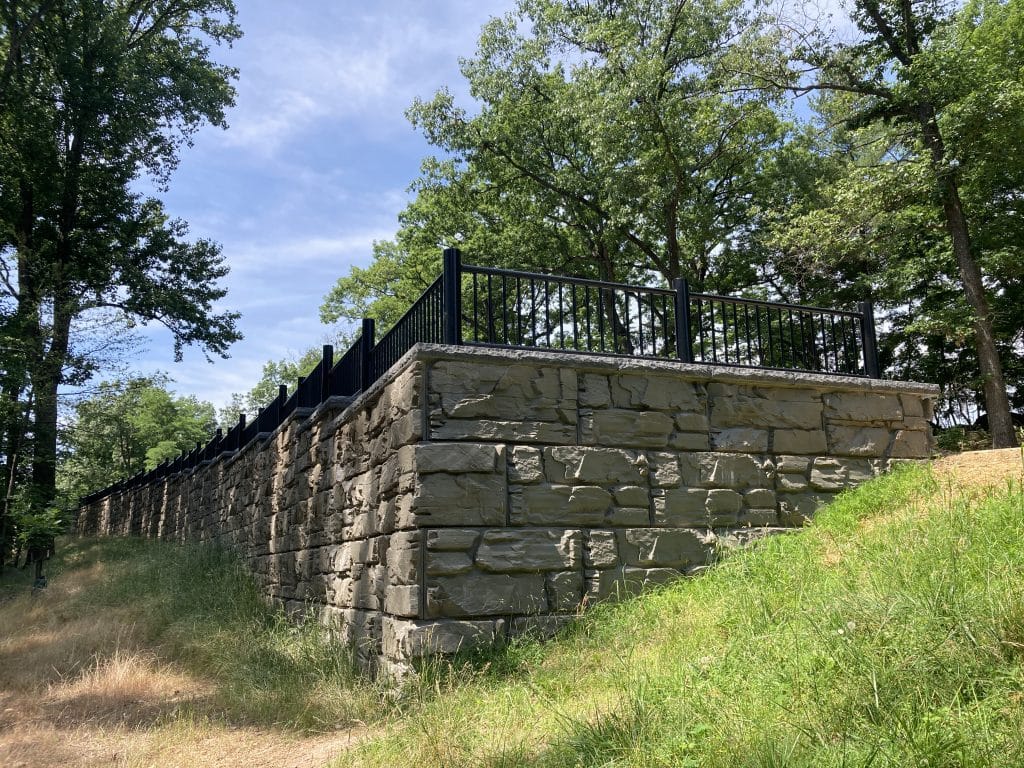
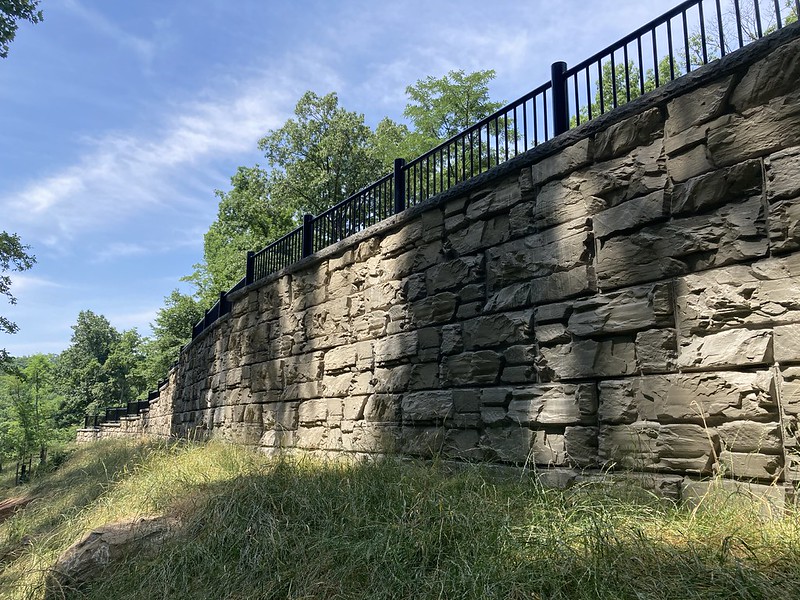
The National Park Service also had specific visual requirements for the site. The team used MagnumStone’s natural ledge face texture on one side of the parapet wall, then attached granite-colored stone veneer to the parking lot-facing side to achieve the desired ashlar pattern. The blocks were stained to match the region’s natural granite color palette.

“It was a really neat way of integrating different hardscaping products to come out with an end product that achieved the structural requirements, long-term stability, and durability required for a historic site with that much traffic, but also the look they envisioned,” Belyea said.

Award-Winning Results

The completed wall reaches 10 feet at its highest point and covers 3,485 square feet, with a hybrid gravity and parapet design. The top courses were filled with concrete to support safety fencing, with posts installed directly into the blocks’ hollow cores for a clean, elegant finish. It also features built-in lateral and vertical drainage channels for superior drainage.

The end result supports active pressures from the roadway and offers a new sidewalk and gathering areas for loading and unloading tour buses.

“Everyone was thrilled with the construction efficiency and the system’s history of performance,” Belyea said. “It looks natural, clean, elegant and fitting of this historic site. The end product was a retaining wall the National Military Park can be proud of, enhancing the safety and experience of tourists who visit from coast to coast or internationally.”

The Little Round Top project was recognized at the 2025 Hardscape North America Awards, taking home the top prize in the Commercial Retaining Wall category.

“It’s nice to showcase what our products can do. It’s an honor to be recognized with an HNA Award for our products and their capabilities. We have an excellent network of production partners and we want to help share their hard work,” Belyea said.

“Seeing the teamwork that goes into all of these projects is special, from consistent block production to scheduling site material deliveries and the creativeness of the engineers and contractors involved to seek out solutions like our gravity extenders. The gravity extenders fit the needs of the project, and resulted in a successful, long-term solution. It’s rewarding to see the full circle moments that come out of it all.”

Lessons for Aspiring Hardscapers

There are many lessons to be learned from an award-winning project like Little Round Top, especially for aspiring hardscapers.

Stay open to alternatives. When the original specifications proved difficult to source, the team didn’t give up. Instead, they proposed an innovative solution.

Efficiency matters. The gravity wall approach with extender units greatly minimized excavation depths compared to alternative solutions, saving time and money while reducing environmental impact.

Small crews with the right tools and systems can tackle impressive installations. This project was possible because the products it used meant they could use compact equipment.

Think about the full picture. This project succeeded because it addressed multiple needs: structural requirements, time constraints, budget considerations, aesthetic demands, and environmental preservation. Great hardscaping is about building something that works on every level.

With Little Round Top, MagnumStone, York Building Products, Structural Engineering Group, and ELA Group crafted work that will stand the test of time, serve its purpose beautifully, and make everyone involved proud of what they’ve accomplished together.

Beyond the Classroom: Why One Professor Takes His Students to Compete at Hardscape North America

Brigham Young University’s landscaping program works to shape the next generation of outdoor design professionals. These students have the opportunity to not just learn in the classroom, but to also gain experience on a national stage.

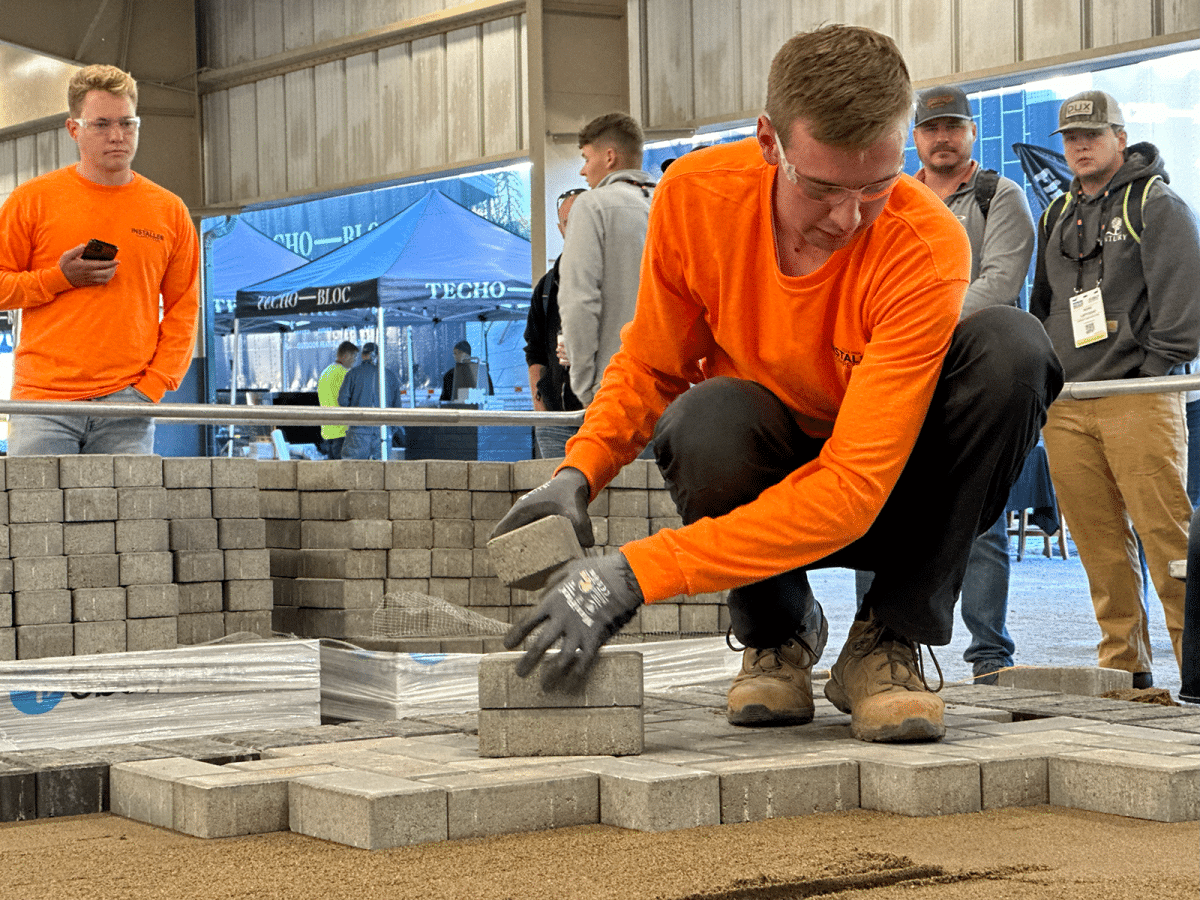
Greg V. Jolley, PLA, ASLA, Professor of Plant and Landscape Systems, often brings a team of students to the annual National Competition at Hardscape North America, where they test their skills against some of the best in the country.

But for Jolley, the competition isn’t just about trophies. It’s about giving students real-world confidence, hands-on experience, and the chance to see themselves as future leaders in the industry.

From Theory to Practice

Jolley’s own path to teaching started after five years of professional practice at a landscape architecture firm in Jackson, Wyoming. When an opening came up at his alma mater in 2003, he jumped at the chance to return. For him, this was a return not just to BYU, but to the same campus where his father had been a professor.

“To be able to go back and have the opportunity to teach in the same place he did, and to be able to teach the topic I loved, it was a no-brainer,” Jolley said.

That real-world experience has proven invaluable in the classroom. Four-year universities excel at teaching theory, Jolley noted, but hands-on skills can be harder to incorporate into the curriculum.

That’s where competitions like Hardscape North America come in.

Hands-On Learning, Real-World Results

BYU has been involved in landscape competitions since the late 1990s, and Jolley has been part of that effort since he arrived back on campus. To bridge the gap between classroom learning and practical skills, he formalized a partnership with BYU’s grounds department in 2003, requiring all students to work there for at least one semester.

“Most students would end up working for more than just one semester,” Jolley said. “They may end up working for two years, three years. If they get into that program early enough, sometimes even gain four years of experience.”

Competitions build on that hands-on foundation by offering a deep dive into specific skills.

“In the case of hardscape installation, just in the preparation leading up to a competition, they can gain hours upon hours of experience,” Jolley said. “It gives them a little bit more depth in the subject than we could otherwise provide as professors or in an academic setting.”

When Jolley asks students about their competition experience, one word comes up repeatedly: invaluable.

“Just to be able to observe professionals doing the work and being able to talk with them and get feedback from them. You have such skilled laborers installing these hardscapes, and just being able to watch them for a couple of rounds of the competition is invaluable,” he said. “I think it generates more ideas in their mind of ways that they can go about their work.”

More Than Just Hard Skills

Jolley also emphasizes that competitions teach soft skills, critical skills that every professional needs.

“We oftentimes think of the install as being just hard skills and that’s it,” he said. “But the soft skills of communication—how do you communicate with one another? How do you problem solve? You might be in the middle of the competition and you have to pivot or adjust what your original strategy was.”

Jolley also encourages his students to stay connected with professional associations, to educate others, and to support their fellow practitioners.

“We want our students to have as they go out into the world a desire to continue to learn and continue to serve in whatever communities that they’re in,” he said.

It’s a philosophy reflected in BYU’s motto: “Enter to learn, go forth to serve.”

“We try and emphasize that to our students that go out into the industry,” Jolley said. And it’s a principle he embodied in his own career trajectory from student to practitioner to educator.

Whether students end up installing patios, designing outdoor spaces, or another industry entirely, the skills and connections they gain at competitions like Hardscape North America become part of a foundation that lasts a lifetime.

Entrepreneur vs. Employee: Which Path is Right for Aspiring Hardscapers?

Every hardscaper faces a big decision at the start of their career: should you begin by building your own business or gain experience by first working for someone else?

Both routes have their pros and cons. Running your own company means independence, but also risk; working as an employee offers stability and mentorship, but less freedom.

If you’re an aspiring hardscaper wondering where to begin, advice from a few industry professionals can help you find the path that fits your personality, goals, and lifestyle.

Learning Then Leading

Dan Hughes, President of Segmental Systems Inc., spent nine years working for a landscape company before eventually purchasing an established hardscape business. That time as an employee was an education.

“I constantly observed how things were done, good and bad, and compared it all to other companies in the area,” Hughes said. “I learned all the basics of landscaping, sprinklers, different construction methods, and even some landscape maintenance.”

More importantly, he gained crucial management experience.

“The longer I was there, the more experience I got running/managing crews, dealing with customers, knowing what we needed for supplies for the day, planning for the next several days, equipment repair and usage,” he said.

However, Hughes is candid about what he didn’t learn as an employee.

“What I never learned was sales, estimating, overhead, payroll, taxes, and the business end of it all,” he said.

When Hughes started working for Segmental Systems with the intent to purchase it, the owner made it his mission to teach him as much as he could during the transition.

Looking back, Hughes appreciates the foundation his employment years provided, but he also acknowledges the value of buying into an established operation.

“You avoid the struggles of having to do all the work yourself while still trying to find work and build a business. That’s a tall hurdle and I applaud those who have done it successfully. It’s a grind to get there for sure. But buying something existing, partnering up with an established business allows you to focus on building and making things better rather on fighting to survive,” Hughes said.

“…If I were to do it all over again, I would definitely work in the trade for a quality contractor and look to buy in or out that company. Starting from scratch is quite risky, and extremely volatile in the dips in the economy.”

Finding the Right Employer

Weston Zimmerman, founder of SynkedUP, experienced a transformative shift in how he viewed employment, one that ultimately prepared him for entrepreneurship.

Starting as a teenager at Tussey Landscaping installing water features and koi ponds, Zimmerman admits he was initially “your average employee” who “worked hard when I was there, but I wanted the Fridays off and I wanted to go do this, I want to go do that.”

Everything changed after he got married and his priorities shifted. At an Aquascape convention in Chicago, hungry to make more money, he approached CEO Greg Wittstock about job opportunities.

“He looked at me like I had three heads,” Zimmerman said. “And I said, ‘Well, I just want to make more money,’ and you can see that he had heard this 100 times. He said, ‘Go back and talk to your boss and ask him what can you do to make the company more money, so that you can make more money.’”

Zimmerman never looked at employment the same way again.

“My mindset, my perspective as an employee shifted forever from that moment on,” he said.

That shift led Zimmerman to become not just a crew lead, but also Director of Marketing at Tussey, launching their social media presence, YouTube content, filming and editing, and managing their website.

Both Zimmerman emphasizes that not all employment experiences are created equal.

“There’s a key ingredient that has to exist and that is the owner of that company has to be willing to give you the autonomy. I could’ve had the exact same story at Tussey Landscaping, but with a different owner that wasn’t willing to give me the rope to climb and it would’ve failed for both of us,” Zimmerman said.

Instead, Zimmerman was able to really have a seat at the table at Tussey and started to offer ideas for business processes and process optimization. That experience eventually led him to founding SynkedUP, a software company that’s transforming how hardscaping businesses operate.

“I actually would probably encourage going and working for someone for a while, but I would also say in the same way that the employer is interviewing you, in your own mind be interviewing the employer,” Zimmerman said. “If you’re going to work for someone, be considerate and thoughtful about who you’re choosing to work for because that’s a key part of the equation in making that successful.”

Built for Independence

Outside of three years in the military, Gary Stowe, President of Stowe Contracting, Inc., has worked for himself since he was 13. For him, entrepreneurship isn’t just a preference, it’s a necessity.

“I’m not a good employee,” Stowe said. “That’s kind of what people need to understand if they want to go in business. It can’t be, ‘I’d like to go in business.’ It’s, ‘I have to go in business.’”

Stowe’s career path in hardscaping has been unconventional. With a nursing degree and three years in the Army, he spent a decade running an auto repair shop before transitioning to construction in the late 1980s. But while these fields seem widely varied, Stowe said they all really come down to his passion for fixing things.

Each career shift also taught him something valuable about business operations, pricing, and customer relationships, lessons that helped him build a successful hardscaping company.

One pivotal lesson came during his struggling years in the auto repair business. Working 70-hour weeks, he accompanied his wife to their accountant for tax preparation. The accountant looked at their returns and said, “You know, you can apply for food stamps if you want.”

“That was kind of an epiphany for me,” Stowe said. The turning point came when he realized he needed to bid jobs properly and account for real overhead costs. “You can’t look at the job—the parts, the pieces of the job, the labor it takes to do the job—that’s only one small part of it. You’ve got overhead of just being in business, and you have to recognize that.”

For Stowe, the appeal of entrepreneurship is clear.

“The ability to make your own decisions, the flexibility to do that. The ability to turn down customers if it becomes necessary, to pick and choose who your customers are, the type of work you want to do,” he said.

He acknowledges the demands are real and that it is not a traditional 9-5 job. He keeps a notepad by his bed because he wakes up thinking about work and he stresses the constant planning and organization required to run a company. But despite the challenges, he’s found deep satisfaction in his path.

“It’s a very fulfilling lifestyle. It’s a great way to employ yourself and others,” he said. “It gives you a great deal of satisfaction, and it’s well worth all the heartache that you go through.”

The Employee’s Path

Elias Null, Optimas Specialist at Pave Tool, pushes back against the cultural assumption that entrepreneurship is the only path to success or fulfillment.

“Society pushes to have your own business and be your own boss. And that’s great! That really is awesome, but different personalities are different, and you don’t actually need to be your own boss to have a good life,” Null said.

For him, the focus isn’t on titles or ownership, it’s on personal growth.

“The goal for myself would be to be the best version of myself that I can be,” he said. “Life is like a creek, and if you’re just sitting on a creek in a kayak or canoe, you’re going to end up downstream. You have to stay rowing upstream if you’re going to have a better life.”

Null’s perspective is a reminder that career success isn’t one-size-fits-all. For those who thrive in structured environments and prefer to focus on craft over business operations, the employee route can be just as rewarding.

Finding Your Path Forward

Determining the right path for you really depends on honest self-assessment. Consider these questions:

  • Are you willing to learn the business side? As Hughes and Stowe discovered, field skills alone won’t sustain a company. You need to understand estimating, overhead, taxes, and cash flow or be willing to learn.
  • Are you energized or drained by business management tasks? If paperwork, bidding, payroll, and planning excite you—or at least don’t exhaust you—entrepreneurship might fit. If you’d rather focus purely on the craft, employment could be your path.
  • How do you handle uncertainty and financial pressure? Hughes notes that even with an established company, “there were a few times where work was sparse. Very stressful when you have a fairly large monthly payment on a business.” Can you weather those storms?
  • Do you need autonomy to be happy? Stowe’s realization that he couldn’t work for others came from recognizing his personality. Some people thrive with structure and clear expectations; others suffocate under them.
  • Can you find the right mentor? Both Zimmerman and Hughes benefited enormously from employers willing to invest in their growth. If you choose employment, choose carefully.

There’s no single right answer. The hardscaping industry has room for all approaches.

Whether you choose to work for a quality contractor, buy into an existing business, or strike out on your own from day one, success comes down to dedication, continuous learning, and being honest about who you are and what you need to thrive.

The Surprising Skill That Will Set You Apart in Hardscaping: Making a Phone Call!

If you’re looking to break into the hardscaping industry, you might have been focused on learning the technical skills, such as how to lay pavers, build retaining walls, operate equipment, or studying materials or sales techniques.

But there’s one skill that could set you apart from other job candidates and make you incredibly valuable to potential employers from day one – the ability to pick up the phone and actually talk to people.

Why This Skill Makes You Instantly Valuable

According to Vanessa McQuade, a marketing expert who works extensively with landscape and hardscaping professionals, “It seems super basic. But that is a huge thing. People are scared of the phone.”

McQuade has access to extensive call tracking data across the hardscaping industry, and what she’s discovered should get your attention.

“One of the biggest things for landscapers and hardscapers is they’re not picking up their phone,” she said.

Business owners are literally losing money because they can’t or won’t handle incoming calls properly.

Even when many professionals do answer their phones, they can miss crucial opportunities.

“If they do pick it up, just answering with a really nice voice makes all the difference,” McQuade said.

That first interaction sets the tone for everything that follows.

Standing Out in the Hiring Process

As a marketer, when McQuade asks hardscaping professionals what makes them different from their competitors, she’s looking for unique selling points.

One response that doesn’t come up nearly often enough? “We pick up our phone.”

“It honestly, is a huge difference,” she says. “It can be a good way to stand out among the crowd.”

As a job seeker, you can use this same principle.

When you’re interviewing for hardscaping positions, most candidates will talk about their physical abilities, their willingness to work hard, or their basic knowledge of the industry.

But imagine being able to tell a potential employer, “I understand that phone communication is crucial to your business success. I’m comfortable speaking with customers, I can represent your company professionally, and I know that every call could be worth thousands of dollars to your bottom line.”

If you can position yourself as someone who understands these challenges and has the skills to help solve them, you become much more than just another hire.

How to Develop This Skill Now

Particularly for Gen Z job seekers, there has not been as much opportunity to practice making and receiving telephone calls. It’s no longer the main function of phones. While people can do basically anything on their phone, the default is texting or voice notes or online chats.

Before you even have a job in hardscaping, you can work on developing your phone communication skills by doing the following:

  • Practice professional phone etiquette. Encourage friends or family to call you and work on answering calls with enthusiasm and clarity. Your greeting should immediately convey professionalism and helpfulness.
  • Learn to ask good questions. Practice gathering information over the phone. You’ll need this if you need to ask about projects, timelines, and customer needs in your hardscaping role.
  • Understand the business impact. Study how customer communication affects hardscaping business success so you can speak intelligently about it during interviews.
  • Role-play customer scenarios. Practice handling different types of calls – initial inquiries, follow-ups, scheduling, and problem-solving – with friends, family members, or other job seekers.

Your comfort with this skill can be a game-changer. When you walk into an interview, you’re offering to solve a real business problem that’s costing hardscaping companies money every day.

Your technical skills will develop with experience, but your ability to communicate professionally with customers is something you can master right now. It might just be the skill that gets you hired!

An Oasis of Opportunity at SkillsUSA 2025

Every year, the Concrete Masonry & Hardscapes Association (CMHA) looks forward to one of the most exciting events in the trades: the SkillsUSA National Leadership & Skills Conference.

SkillsUSA brings together an estimated 15,000 students, teachers, education leaders, and representatives from 650 national corporations and trade associations. With over 6,500 students competing in 114 hands-on skill and leadership competitions, the energy was absolutely electric.

For many students, SkillsUSA marks their first real exposure to such a wide range of career possibilities. Bryan Horr, P.E., Division Engineer of Segmental Pavements at CMHA, wants them to understand the benefits of a career in hardscaping.

“We always talk about working outside, being your own boss, lots of room to grow,” he said. “You don’t need to go to college—that’s one way you can go, but there are different paths. You can go through the trades or you can start your own business. The career opportunities are endless in the hardscaping field.”

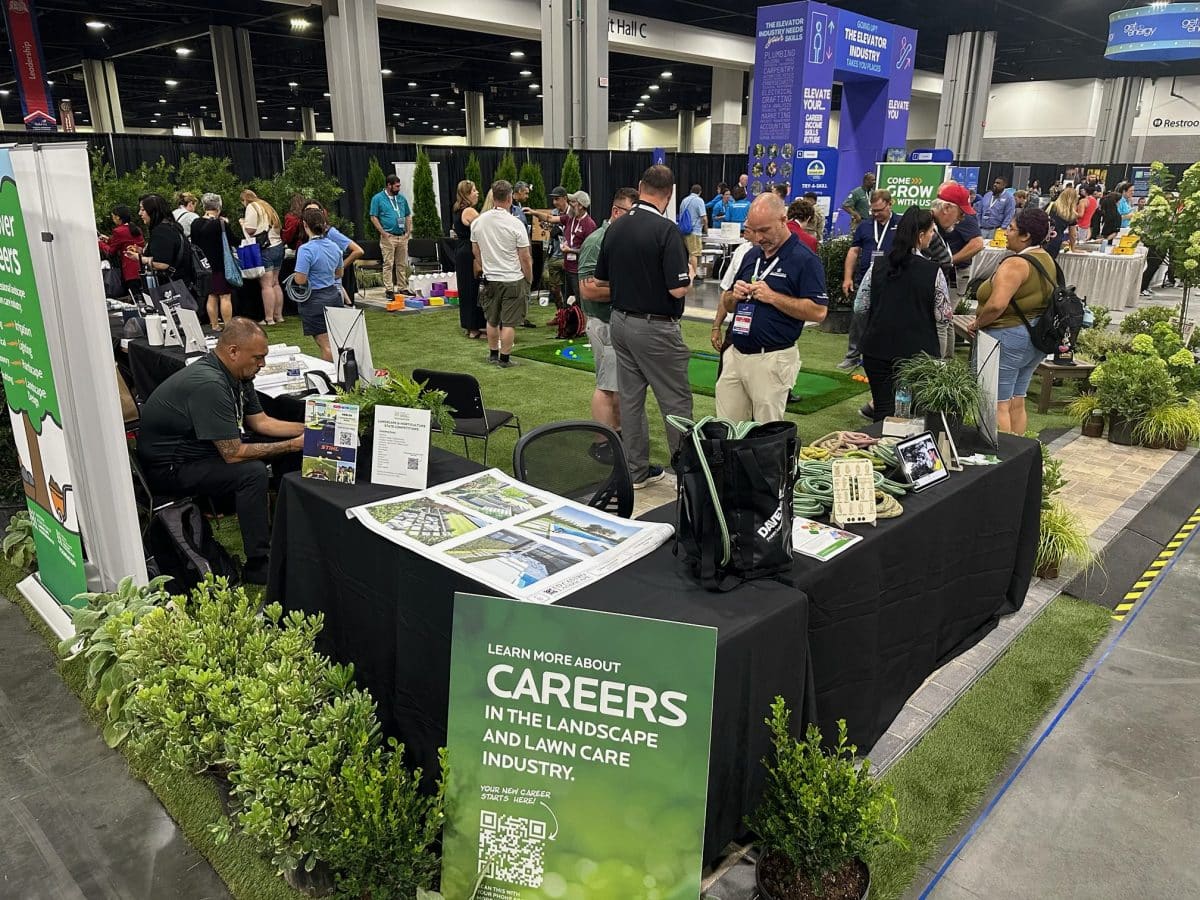
CMHA uses their booth at SkillsUSA to creates an environment where young people can truly envision themselves building a future in hardscaping.

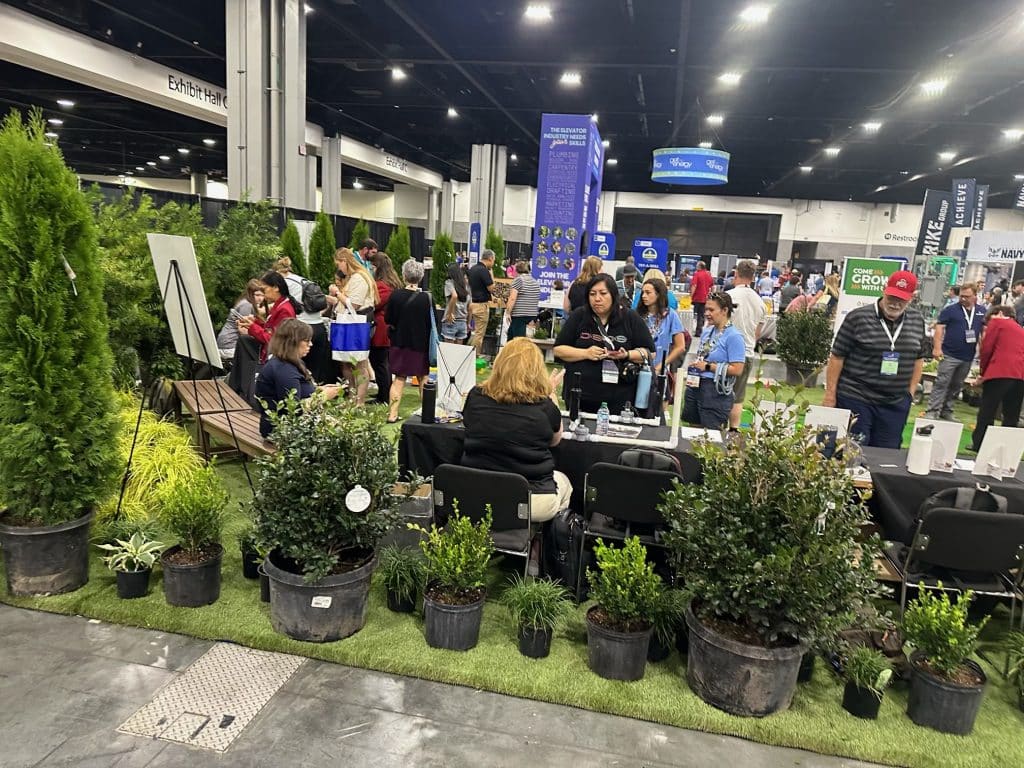
Horr described the CMHA booth as “kind of an oasis in the conference center.” Unlike the typical booths, the CMHA space featured beautiful hardscaping elements like pavers arranged into an inviting patio area, complemented by trees, bushes, plants, and flowers that created a refreshing green contrast.

“We had a lot of people come to the booth to talk to me about what was going on,” Horr said. “We’re a big attraction because we’re a green area with plants and trees and hardscaping items. It really stands out from all the other trades at the event.”

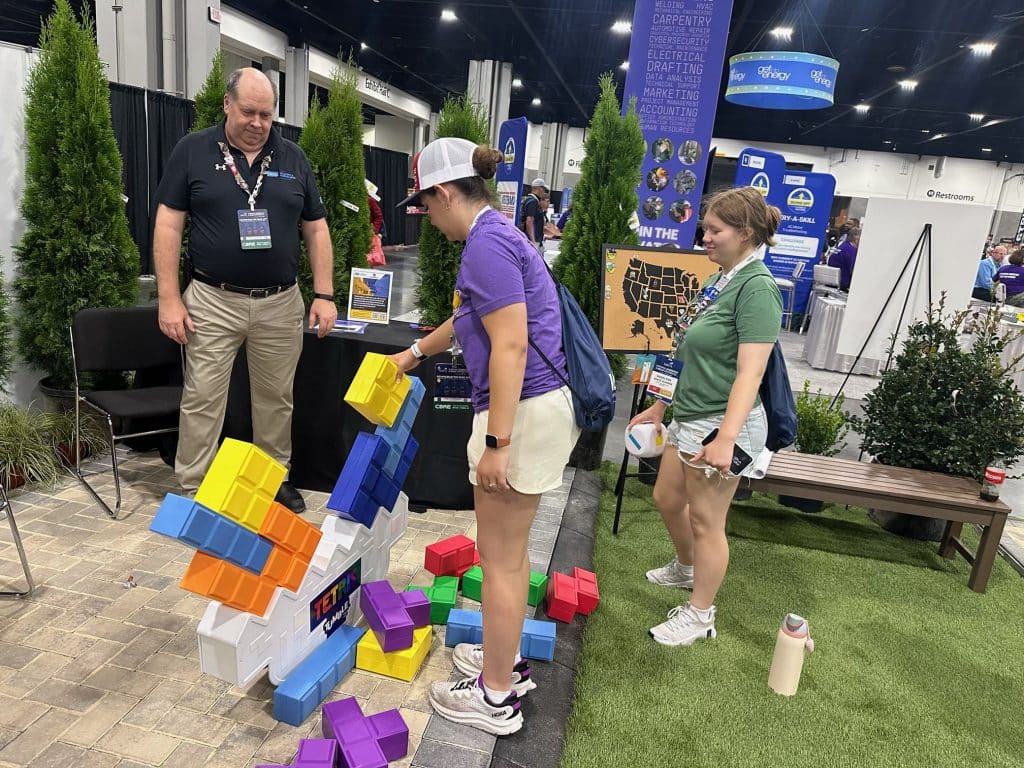
Embodying the real-world problem-solving and precision skills used in hardscaping, one of the highlights at the booth was CMHA’s “Tetris Tumble” game. Using large Tetris-shaped blocks, competitors had to carefully balance pieces on a rocking board, with the goal of making their opponent’s tower tumble first.

Winners earned a special edition CMHA SkillsUSA pin—a highly coveted item in the conference’s famous pin-trading tradition. These pins became an instant hit and helped draw a steady stream of curious students to the booth.

Horr said he enjoyed chatting with students who stopped by to explore their options.

“The thing that I was hoping students take away is that there are so many opportunities out there for their careers, their growth, and their development,” Horr said. “Just keep their minds open and do what they enjoy. If they like to be outside, hardscaping is a great opportunity. They’re just at the beginning of their lives, so there are many opportunities out there.”

CMHA’s participation in SkillsUSA is an ongoing commitment to nurturing the next generation of hardscaping professionals. Each year, CMHA returns with renewed energy and fresh ideas for connecting with students who might find their calling in the hardscaping industry.

Learn more about career opportunities in hardscaping and how you can get involved in shaping the future of our industry.

Commercial vs. Residential Hardscaping: Which Path is Right for You?

For those considering a career in hardscaping, one of the decisions you may face is whether to focus on residential projects or commercial installations.

While the fundamental techniques may be similar, these two paths offer different experiences, challenges, and rewards. As an aspiring or early career hardscaper, it is worth exploring both to see which might be the right fit for you. 

Understanding the Two Paths

At its core, hardscaping involves the same materials and installation techniques whether you’re working on a backyard patio or a shopping center plaza. The primary differences lie in the scale, design process, client relationships, and business operations.

Residential projects commonly are referred to as Design-Build. This is because the contractor provides both the design and build services to the homeowner. Most commercial projects are Design Specification where the owner provides details, developed by a third party, of the methods and materials needed to achieve the wanted outcome. In commercial projects the hardscape contractor is usually a subcontractor, typically working for the general contractor who in turn has a contract with the owner.

Residential hardscaping typically involves working directly with homeowners on custom projects for their personal property. These jobs might include backyard patios, walkways, outdoor kitchens, fire pits, and retaining walls—all designed to enhance a family’s outdoor living experience. The work is highly personalized, often creative, and involves significant client interaction.

Commercial hardscaping usually involves larger-scale projects for businesses, developers, or government entities. These might include parking lots, plazas, walkways for shopping centers, or hardscaped areas for apartment complexes. The work tends to follow pre-established plans created by landscape architects or engineers, with less room for on-site creativity but greater emphasis on efficiency and adherence to specifications.

Understanding Payment Terms
For most residential projects payment terms favor the contractor. Usually there is a large, up front payment and final payment is due within days of completion.

For commercial projects payment terms generally favor the owner and/or general contractor. Payment terms are defined by the contract. Payments often don’t start until there is materials on site and they are typically due in 30 or 60 days after invoicing. Depending on the contract, there may be progress payments. Payment for completion of the project may take even longer and it isn’t uncommon to have 120 days. Also there is typically a 10% retainage/holdback which is kept to address issues that may appear well after the completion date. Retainage/Holdbacks may take a year or more to be released. Subcontractors don’t get their retainage/holdback until the owner releases the GC’s retainage/holdback and this may not even happen due to issues related to other subcontractor’s work, over which you have no control over.

Residential projects are typically smaller in scale, so you can do more in a year, lower total cost, but they earn higher margins.

Commercial projects are typically larger in scale, so you will only do a few a year, they have a higher total cost, but lower margins. Focusing your company on a specific market and optimizing your company based on these general principles can make your company very profitable.

The Residential Experience: Creativity and Connection

Harrison Woytko, President of Boulder Landscape, LLC, primarily focuses on residential projects. He was drawn to this sector for its creative possibilities and the opportunity to provide excellent customer service.

“From a creativity and expanding your knowledge perspective, I think the residential market offers much more,” Woytko said. “If you’re someone with creative skills or if you want to see different projects at different houses in different neighborhoods and meet different homeowners, there’s lots of opportunity and freedom there.”

This variety extends beyond just creative expression. Residential hardscapers often build meaningful relationships with their clients.

“We’re pretty good at the back-and-forth with a residential customer. We’re good at having a kitchen table talk. We can listen to somebody and we can pivot and come up with a better solution or something that’s more tailored for them,” Woytko said.

These personal connections often make the work more rewarding.

“Homeowners might have saved their money for 10 years to build a patio so they’re invested,” said Frank Gandora, President of Creative Hardscape Company. “You have great interaction with these people. They’re grateful that you’re doing it, and it’s a very positive situation.”

Woytko said that customer service piece also plays a role when hiring for his team.

“From a hiring perspective, we’re looking for someone with a positive attitude along with good customer service skills. It doesn’t mean that every employee has to have a one-on-one conversation with the homeowner when they come home every day or that they have to make the sale and engage them, but it’s important that they’re respectful, have a good attitude, and have social intelligence when it comes to interacting with others,” he said. 

The Commercial Landscape: Scale and Structure

Commercial hardscaping offers its own set of advantages and challenges. These projects are typically larger in scale, more structured in their execution, and often involve working with other construction trades as part of a larger development project.

“In commercial work, you have engineers, you have architects, a landscape architect. They designed the plans. They create the elevations. They create all the data you need to do a commercial job. There are plans, specifications. They tell you the methodologies and how to install it in most of the cases,” Gandora said.  “What’s being used on a commercial job is your labor.”

These projects present the opportunity to hone in on a particular skill—such as laying pavers across expansive plazas or courtyards—and execute it with precision. They also highlight how strong teamwork and coordination are essential to bringing large-scale visions to life. With multiple teams working in tandem under tight deadlines and strict specifications, commercial hardscaping becomes a lesson in efficiency, communication, and collaboration.

Finding Your Path Forward

Ultimately, the choice between commercial and residential hardscaping isn’t necessarily permanent. Many professionals start in one sector and transition to the other as they gain experience, move locations, or as market conditions change.

“I don’t know if you have to pick an avenue. I just think it’s how you can cater to your customer, whether that customer is a large general contractor or production home builder or Mr. and Mrs. Jones with a residential project on their home,” Woytko said. “For someone just getting into the business or maybe starting to work for a company, I think it’s really dependent on your market and where you see your vision going.”

Reputation Matters in Hardscaping: Building a Reputation Through Quality Work

Hardscaping is a trade built on trust, relationships, and reputation.

Delivering high-quality work is one of the most effective ways to establish a strong professional reputation. A well-executed project not only satisfies your client but can also lead to repeat business and valuable word-of-mouth referrals.

Reliable and Trustworthy

Your reputation is your most valuable asset in the hardscaping industry. When clients and contractors know they can count on you for top-tier work, they’re more likely to refer you to others and bring you back for future projects.

“For job seekers in the hardscaping industry, reputation is everything. Start by mastering the fundamentals—pay attention to detail, work efficiently, and always strive for quality. Be reliable and professional in every situation, no matter how large or small the opportunity is,” said Trevor Fearn, VP Operations at CornerStone Wall Solutions Inc.

Andrew Vear, a longtime installer and consultant, also emphasized the importance of reliability and trust. He recommends maintaining strong relationships with past clients.

“They’ve already done business with you, they already trust you. They’re the best people to do business with,” Vear said.

A Job Well Done

Jason Stewart, owner of JPAVE, shared that having a reputation for high-quality work has earned him repeat business and new contracts. “I get hired in a lot of times because of my quality, and to clean up somebody’s mess,” Stewart said.

For Nelson Braybrook, owner of Call Nelson Landscaping in Mississauga, Ontario, word-of-mouth referrals have been a driving force in his success. One of his early projects led to a lasting connection with a family who was so impressed with his craftsmanship and professionalism that they sought him out and tracked him down years later, even after he left his previous company. That single job sparked a chain reaction, with their friends and colleagues at the local college continuing to recommend him.

“Somehow, I ended up in this college network with everybody,” he said. “And it just worked out really well.”

Braybrook attributes this loyalty to the high standards he sets for himself and his work. Clients know they are getting quality craftsmanship, honest service, and a finished project they can be proud of.

“They know they’re getting a good job. They know their money’s not going to get stolen from them, and they’re not just going to get generally ripped off,” Braybrook said. “They know they’re going to get a quality project.”

A job well done doesn’t just lead to satisfied clients—it creates advocates who will recommend you to their friends, family, and colleagues. On the flip side, poor craftsmanship can do just as much damage to your career as quality work can build it.

“If you can get three referrals from a good job, that’s great,” Vear said. “But 100 people will see a bad job.”

Sloppy work, delays, and lack of professionalism can quickly tarnish a hardscaper’s reputation, making it harder to land jobs in the future.

The Role of CMHA in Building Your Reputation

Organizations like the Concrete Masonry and Hardscapes Association (CMHA) provide hardscapers with valuable training, certifications, and mentorship to help them refine their craft.

“Always be willing to learn and grow—whether that means seeking mentorship, taking certification courses, or attending industry events,” Fearn said.

By taking advantage of these resources, professionals and aspiring hardscapers can gain the skills needed to consistently produce high-quality work that builds their reputation.

While quality work is a key driver of success, reputation is also built through professional networks. Be sure to check out our companion blog post, Reputation Matters in Hardscaping: Building Your Reputation Through Professional Networks, on how networking and industry connections can take your career to the next level.

Reputation Matters in Hardscaping: Building a Reputation Through Professional Networks

While delivering high-quality work is essential for building a strong reputation in hardscaping, professional relationships play an equally crucial role.

Networking within the industry can lead to new opportunities, collaborations, and valuable mentorships that help long-time hardscapers and aspiring hardscapers grow in their careers.

The Importance of Community and Mentorship

Cultivating strong professional relationships can open doors to new opportunities and ensure a steady flow of projects.

“Word-of-mouth has been one of the most influential factors in my hardscaping career. Building strong, respectful relationships helps you become a top choice for referrals. One of the fastest ways to achieve this is by responding to all inquiries promptly—whether you have the answer or not. Quick responses show that you’re engaged, reliable, and committed to addressing people’s needs, which builds trust and confidence. While it may seem simple, this habit fosters respect and strengthens professional connections,” said Trevor Fearn, VP Operations at CornerStone Wall Solutions Inc.

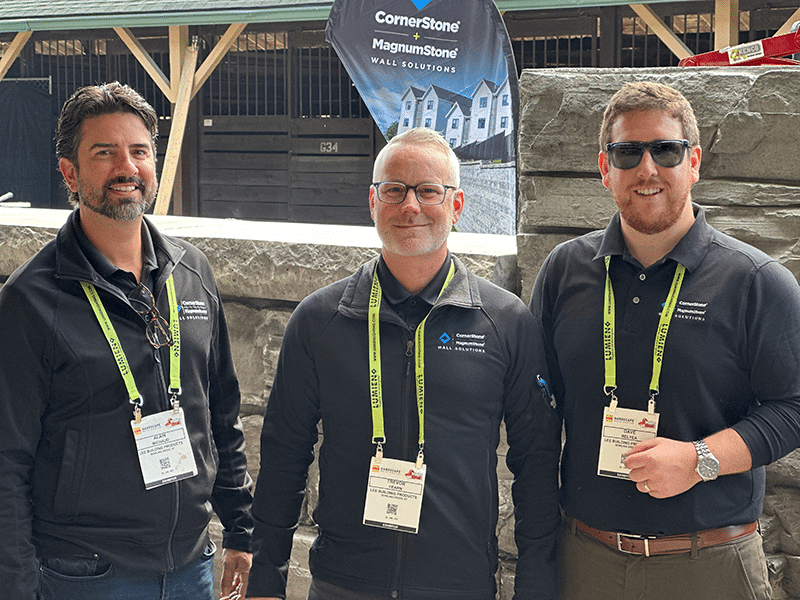
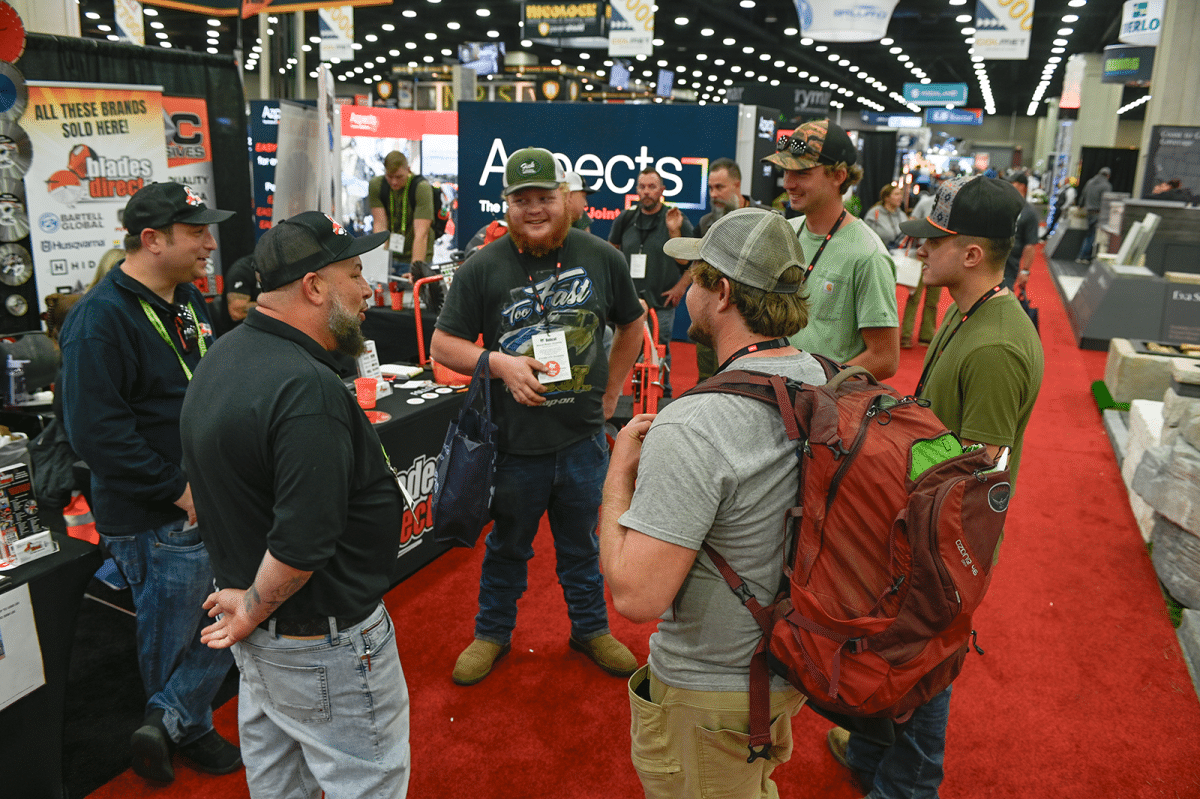
Trevor Fearn (center) is pictured with his colleagues at Hardscape North America.

“By prioritizing responsiveness and reliability, I’ve been able to unlock new opportunities and advance my career. Being at the top of a professional’s referral list is a powerful asset in this industry.”

Organizational Support

Organizations like the Concrete Masonry & Hardscapes Association (CMHA) support both the craftsmanship and relationship-building aspects that are key to a good reputation in the industry. Industry events and trade shows offer invaluable networking opportunities for both new and experienced hardscapers.

Vear strongly recommends attending trade events like Hardscape North America, which is hosted by CMHA. These gatherings provide not just education but crucial networking opportunities with manufacturers and fellow professionals.

“If you can get to HNA, that’s absolute—you have to go to that. If you’re in this industry and you don’t go to HNA, you are missing out on everything,” Vear said.

For Dan Hughes, President and Owner of Segmental Systems Inc., building a national network of hardscapers has been integral to growing his skills and knowledge. He credits CMHA with the connections that have bolstered his business into an industry leader. 

“I used to look at these guys that were involved and they’re writing articles and magazines, and they’re doing stuff. And I know who these guys were. As I got involved in the organization, I’m actually now friends with these guys that used to be my mentors,” Hughes said. “…And I’ve made some great friends. But it’s being involved that really grew me as a professional and really elevated my level of knowledge in the industry. The discussions that I have, both within meetings and outside meetings, with these individuals are some of the best, most intelligent conversations you can have about the industry.”

Dan Hughes, President and Owner of Segmental Systems Inc. (center) is pictured at Hardscape North America.

Unlocking Opportunities Through Networking

Networking is also about maintaining existing relationships. Whether it’s keeping in touch with past clients, staying active in professional circles, or engaging with peers online, relationships built over time can lead to unexpected job opportunities and partnerships.

“Networking is key to growing in this industry. I stay active in professional associations like CMHA, attend trade shows, and participate in training workshops to connect with peers and suppliers. Social media platforms, such as LinkedIn, also help me showcase my work and engage with others in the field. Additionally, maintaining strong relationships with industry professionals has opened doors to new opportunities and collaborations,” Fearn said.

“The key is to provide value—whether that’s sharing insights, offering help, or simply staying in touch consistently.”

For job seekers looking to break into hardscaping, the key to success lies in both relationships and quality work. Your reputation will determine how many doors open for you, and word-of-mouth can be your strongest asset. Be sure to check out our companion blog post, Reputation Matters in Hardscaping: Building a Reputation Through Quality Work, on how delivering high-quality work strengthens your professional reputation.

GET STARTED WITH A CAREER IN HARDSCAPING TODAY!