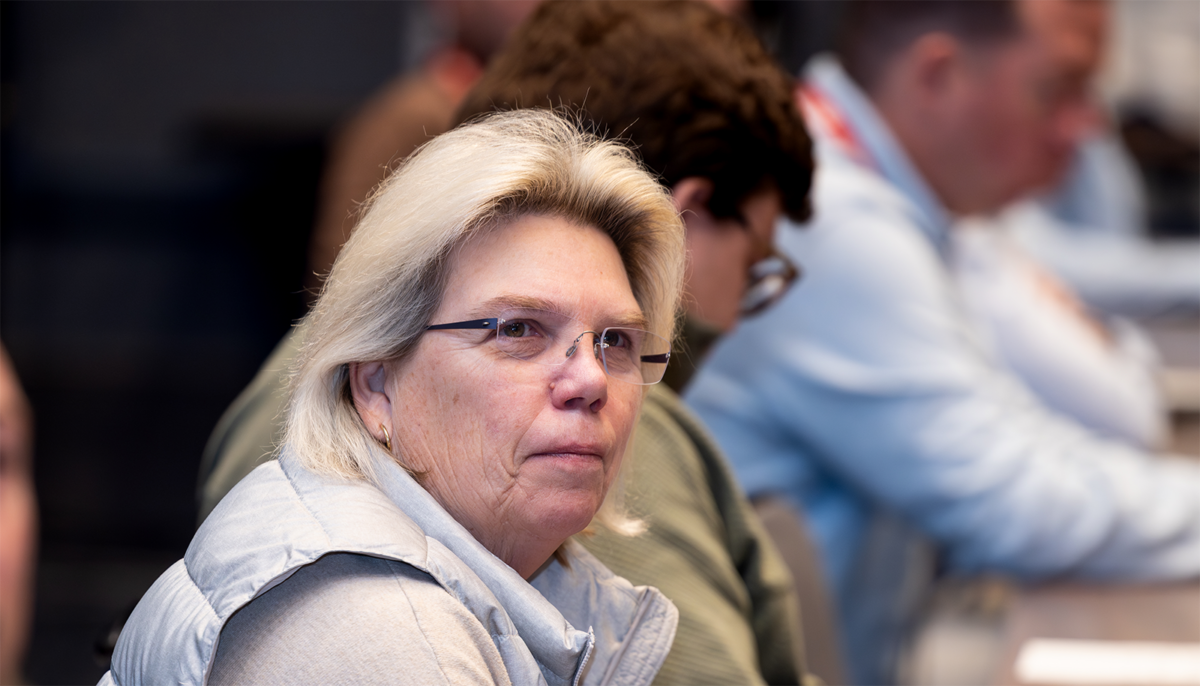
Sandy Gohres has never been afraid of the unfamiliar. In fact, she tends to seek it out.
Gohres came to the hardscaping industry after more than two decades in the wireless industry. Now the Director of Sales & Marketing at Mutual Materials, her unconventional path is exactly what makes her career journey resonate with aspiring hardscapers, especially women looking to carve out their place in a traditionally male-dominated field.
A Career Built on Pivoting
Gohres got her start in the wireless industry in the late 1990s. She moved through wireless carrier distribution and manufacturing, eventually shifting to running sales and marketing nationwide for a variety of wireless accessory companies. It was a fast-paced, heavily male-dominated world, and she thrived in it.
But Gohres is someone who feeds on change.
“Humans, by nature, don’t like change,” she said. “I enjoy change. It keeps me young. It keeps me thinking.”
By 2024, she was ready for her next career move. When she spotted a LinkedIn post from Mutual Materials, she began digging into the company’s history and its leadership. The more she learned about this century-plus-old company led by Kendall Anderegg, a fifth-generation industry professional and female CEO, the more Gohres wanted in.
“Coming from wireless, which was very male-dominated — just like our building materials industry — to see that Kendall, yes, she’s family, but she had to earn her way up into CEO and President, being a female, and leading the organization,” Gohres said. “That really intrigued me. What can I learn from her?”
Finding the Parallels
On its face, it is easy to wonder what experience in wireless would have to do with hardscaping, but Gohres saw the connection immediately.
“Looking at our partners, on the wireless side, I had distributors. I had dealers. I had our own retail,” she said. “Over here at Mutual, I’ve got distributors. I have dealers. And I have my own retail.”
The consumer psychology also mapped closely.
“When you buy a home, or you rent a home and you’re moving in, you want to freshen up your space,” she explains, “whether it be your front yard, or backyard, or fire pit, or paver, or driveway.”
In her view, that desire for renewal and personalization is the same impulse that drives someone to buy a new phone case or a fresh battery pack.
“Different product, but the human need is very similar,” she said.
That clarity of thinking gave Gohres the confidence to make the leap and prepared her to learn from the ground up.
Walking into a company where many employees had tenures measured in decades, Gohres knew her credibility would need to be earned, not assumed. She leaned into humility.
“I had to build some trust, and part of that is just going, ‘Guys, I don’t know, but I want to know. So, help me,’” she said. “I still have a lifetime to learn, but now I think I can hold my own pretty well in most conversations.”
She attended CMHA industry trainings, visited job sites, and watched customers lay patios and build retaining walls firsthand.
One of the biggest revelations for Gohres was the sheer scale of the hardscaping industry.
“When I applied for the job, I was thinking homeowner pavers,” she said. “But my eyes really opened up to see that it’s everywhere I walk. It’s in front of the grocery store, the campus down the street, my son’s high school. It’s everywhere.”
Transforming a Culture
Two years into her role, the achievement Gohres is most proud of is the culture shift she has helped usher in. As Gohres learned more about the industry, she saw new competitors entering the market, but felt Mutual Materials had grown comfortable in its legacy.
“We weren’t that hungry,” she said.
Gohres changed that. She introduced a mindset centered on continuous improvement.
“Let’s try to be 1 percent better today than we were yesterday,” she told her team.
She brought a slow cultural drip of new expectations before executing a full sales restructure, reorganizing the team around key accounts and business development rather than traditional residential and commercial territories.
Not everyone loves change as much as Gohres does. She described the process as “lumpy and bumpy.” But by clearly communicating the why behind the reorganization, she guided her team through the transition. Within less than a year, the organization was 95 percent aligned.
She also tackled a deeper organizational problem: siloed departments that had calcified over decades. Sales, operations, and production operated separately. Gohres pushed for a different model.
“Too many organizations look at it as a triangle,” she said. “When you get down in the triangle tips, that’s a 45-degree angle, and that’s hard to make that turn and that pivot. But if you really look at it as a circle, then nothing stops you.”
Advice for Aspiring Hardscapers
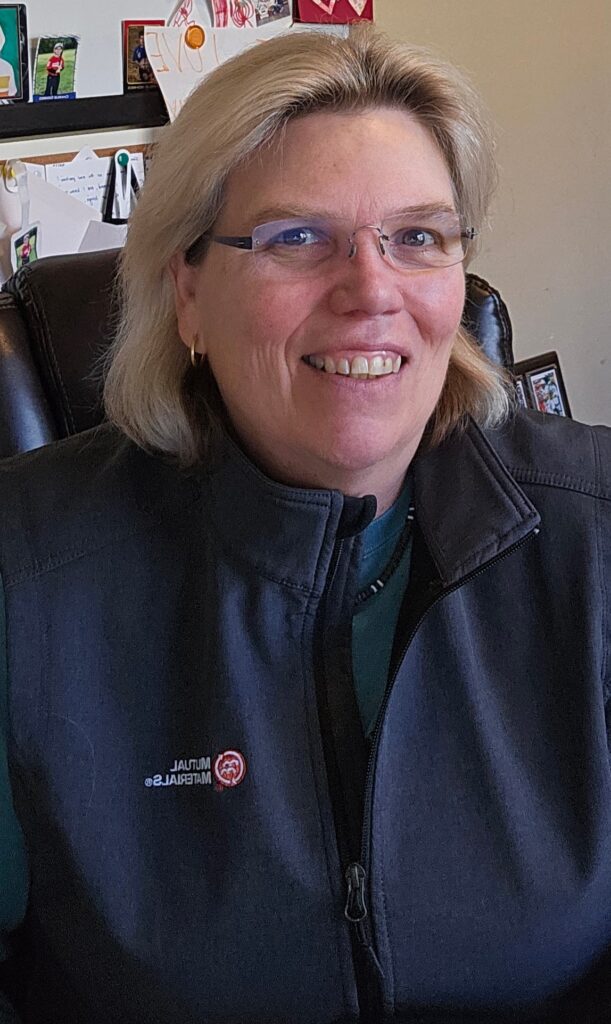
When hiring for her team, Gohres looks for curiosity.
“I want somebody that’s hungry to learn. Come in with ideas, but come in with openness to listen and learn,” she said.
She also prioritizes diversity of thought.
“I don’t want a whole bunch of me,” Gohres said. “I need diverse ideas, and I need people from diverse backgrounds.”
Her favorite interview question reflects this mindset. She always asks, “Tell me why I should NOT hire you,” a reversal of the most common interview question.
The goal, she explained, is to see self-awareness and adaptability, qualities that are essential in an ever-evolving industry.
For women considering a path in hardscaping, Gohres speaks with the directness of someone who has navigated male-dominated industries her entire career.
“We’ve come a long way, but the industry is still predominantly male, and there can still be underlying biases,” she said. “It’s better than it used to be, but there’s more work to do.”
Her advice for navigating it isn’t to shrink or to escalate, it’s to be strategic.
“Let their ignorance showcase their inability,” she said. “When someone isn’t showing up in the best way, I try to take a step back and let their behavior speak for itself.”
Beyond managing difficult personalities, Gohres wants women in the industry to know their value and not be afraid to speak up.
“I think sometimes too many women wait until after the meeting, and then we go have a side conversation,” she said. “Maybe they’re intimidated or think, ‘Nobody wants to hear from me.’ The only way somebody’s going to hear you is if you speak.”
Whether it’s a raise, a promotion, or getting support on a project, she is emphatic about self-advocacy.
“I need my people to promote themselves,” she said. “And it’s okay to promote yourself, especially as a female.”
Gohres would love to see the hardscaping industry actively recruit and develop women at every entry point.
“I think the more that we can do at the beginning level — meaning women actually becoming masons, women becoming contractors, or working in our locations — we have to do a better job of highlighting that the trade is not just for men,” she said. “We need more females in the trade.”
Running Toward What’s Next
Two years into her career pivot into the hardscaping industry, Gohres knows she made the right choice.
She is fueled by change, but only if it is intentional change. She reflects this same intentionality in every aspect of her life.
Every work day, she’s at her desk by 5:30 a.m. for what she calls her “quiet time.” It’s an hour before the noise of the day begins, spent reviewing sales reports, preparing communications for her team, and mapping out her priorities. At day’s end, she reviews the same to-do list she wrote in the morning. Some days she checks everything off. Others, the list only grew.
Outside of work, Gohres has found her intentional reset in running. A former collegiate softball player and coach, she said she used to do everything she could to avoid distance running.
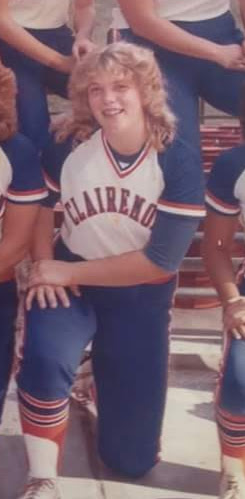
“At first, the training was really arduous. Not physically hard, but mentally. But then it became my calm. When I’m out there running, whether it’s a mile or five miles, it is time for my brain to reset,” she said.
Gohres set a goal before turning 50 to complete a half marathon. She signed up for races to force herself to train, achieved her goal, and never really stopped. Now 58, she wants run a full marathon before she turns 60.
From wireless to hardscaping, from rookie to leader, from reluctant runner to marathon hopeful, her journey as runner shares a lot of parallels with her career. It was built step by step, decision by decision, with a willingness to lean into change and discomfort and keep moving forward anyway.
Change, after all, is not something Gohres fears. It’s something she runs toward.