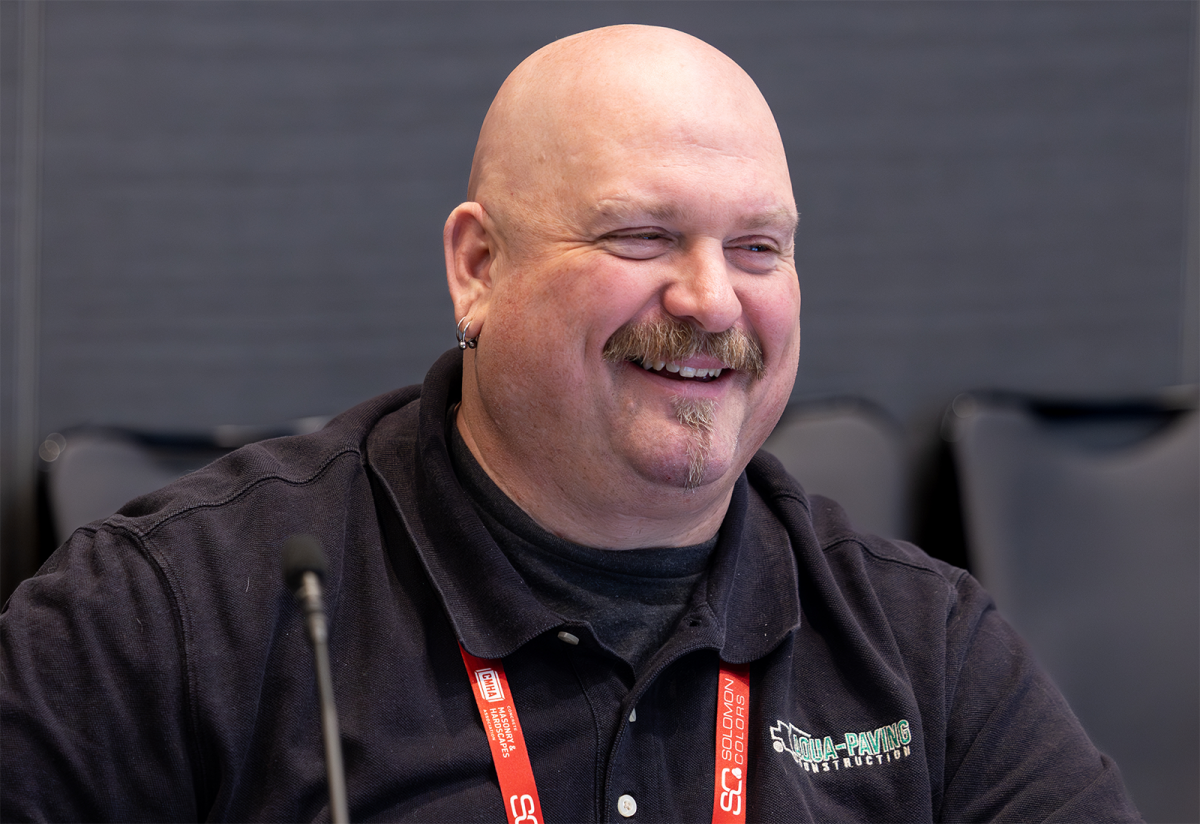
His father, Bill Schneider, started LPS Pavement Company in the Chicago area when Derek was just three years old. The company, which celebrates its 50th anniversary this year, is widely regarded as the first commercial brick paving company in the United States.
Despite this early introduction, Schneider wasn’t originally sure that this was the industry for him. But he found his way back, learning a lot of lessons along the way.
Growing Up in the Industry
“I’ve always kind of grown up with pavers in my pillow,” said Schneider with a laugh.
His childhood was shaped by the rhythms of an industry that was still writing its own rulebook.
Schneider’s childhood home was already set apart from every neighbor on the block. Paver walkways and patios surrounded the house at a time when such things were nearly unheard of for residential properties.
“Nobody had pavers at their house in the late 70s. Nobody. That just wasn’t even a thing,” he said.
Bill Schneider was the kind of entrepreneur who mortgaged the family home to bet on his vision. Before starting LPS, he had worked construction in several capacities, including a stretch in Honolulu in the late 1960s helping build the skyscrapers rising in downtown as the city boomed. He came back to Illinois, worked as a carpenter and then a concrete worker, and eventually spotted an opportunity in pavers that nobody else was seizing. He took it.
“He was instrumental to what’s happened with this industry in this country in so many ways,” Schneider said.
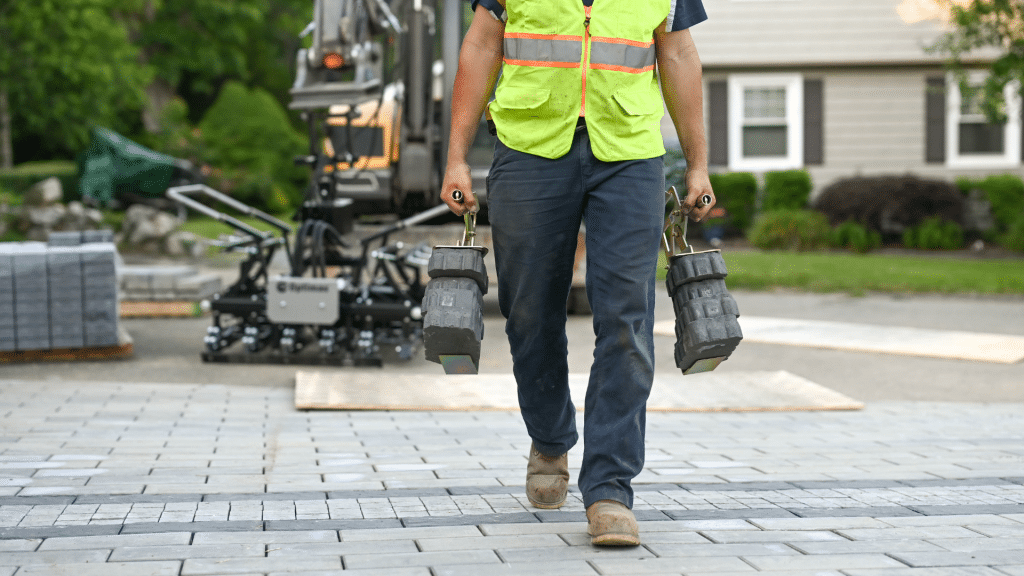
LPS became a commercial-only brick paving company and quickly accumulated a long list of industry firsts: first to do mechanical installation of pavers, first to do mechanical installation of permeable pavers, first to bring permeable pavers to commercial scale.
By the time Schneider was eight years old, his father was dropping him off on job sites for the day, leaving him with the crew to observe, pitch in when he could, and try not to get underfoot.
“I knew he worked hard. I knew he was gone a lot. He put his employees first, he put the company first,” Schneider said. “That wore off on me more as an adult than it ever did as a kid.”
Back to the Family Business
Despite growing up surrounded by the business, Schneider didn’t follow a straight path into it. After high school, he set out on his own, working a stretch of jobs including carpentry work that had him traveling so relentlessly he once calculated he was paying rent on an apartment he saw a maximum of three nights a month.
He ended up in Michigan, juggling multiple jobs, before meeting Kristina, the woman who would become his wife of 25 years and counting.
It was creating his own family that finally brought him back to the family business. His father called and offered him a role, and Schneider and his new wife and kids moved back to Illinois in 2001.
His re-entry into the industry started with a new division focused on cleaning, sealing, maintenance, and restoration of existing paver work. For about 10 years, Schneider led that operation.
When the recession hit in 2008 and the cleaning and sealing work reduced, Schneider moved into estimating at LPS full-time.
Building Something New
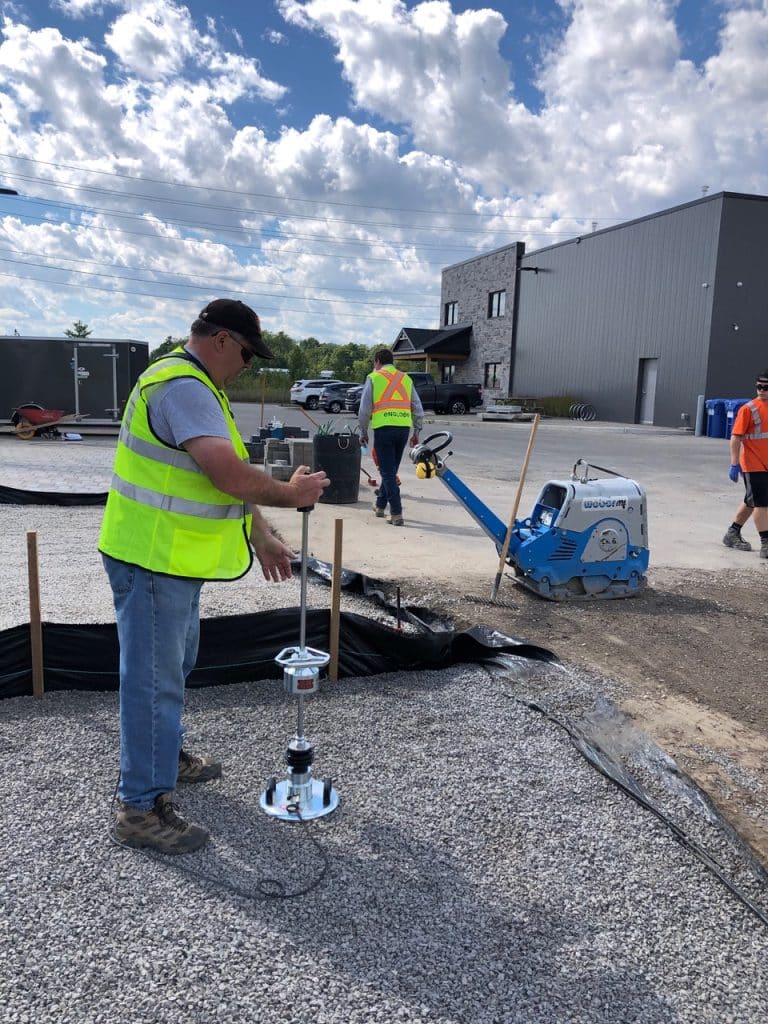
In 2010, the family launched a second company called Aqua-Paving Construction, specifically designed to install Permeable Interlocking Concrete Pavers (PICP) mechanically and to travel doing it, ultimately working across 14 states.
The company’s early work in Nashville, Tennessee helped ignite what has become one of the most significant permeable paver markets in North America. After a major Cumberland River flood caused what was at the time record-setting inland flood damage, Nashville overhauled its stormwater management requirements. Aqua-Paving was already there.
“Everything has permeable pavers in Nashville,” Schneider said. “Everything. Raising Cane’s, McDonald’s, Burger King, La-Z-Boy Furniture — even if it’s just some, they all have to find a way to control their stormwater.”
For years, Schneider was doing double duty. He was estimating for LPS during the day and staying up two nights a week doing Aqua-Paving’s estimating for free. His father eventually walked into his office and told him he was fired.
“I said, ‘You can’t fire me, I don’t get paid,’” Schneider said. His father conceded the point. Eventually, Schneider took over Aqua-Paving full-time and led it for the better part of a decade.
Now, with the current president of LPS approaching retirement after more than 40 years with the company, Schneider is transitioning back to take the helm of the flagship operation.
Aqua-Paving is winding down, working with longtime partners to transition equipment and ensure the permeable paver markets will continue to be well served.
Raising the Industry Standard
Schneider’s investment in the hardscaping industry extends well beyond his own companies. His father was a founding member of ICPI, the predecessor organization to the Concrete Masonry & Hardscapes Association (CMHA) driven by the belief that contractors needed their own voice in an industry often dominated by manufacturer interests.
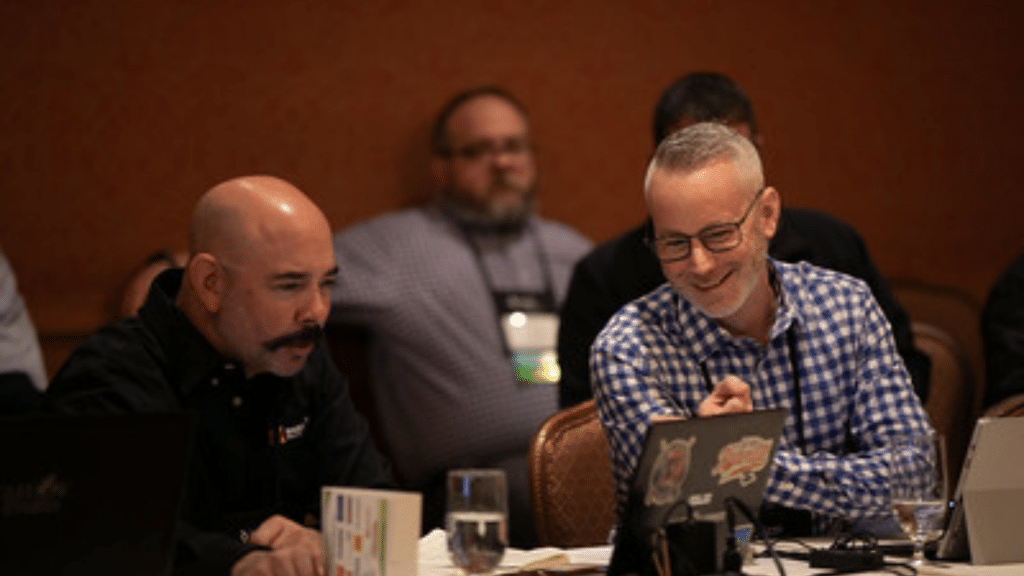
Schneider has carried that conviction forward. He has been an active member of CMHA since 2014 and currently serves on the Contractor Special Committee, the Hardscape Technical Subcommittee, and the Hardscape Construction Subcommittee.
“We get so far in the weeds on really obscure stuff, and I love it,” he said. “You will never see meeting minutes that don’t have my name in them like 14 times. Why go if you’re not involved?”
He wants to play a key role in positioning CMHA as the industry’s definitive standard-bearer, focused on raising the quality of work across the board.
He tells the story of a major national retail developer who swore off pavers entirely after a single botched installation caused severe sinkage at one of their properties.
“”So many of these younger guys are getting their education from TikTok,” he said. “…One bad job, no matter who does it, qualified or not, can ruin the next thousand for everybody else.”
Advice for Aspiring Hardscapers
From his earliest days running the cleaning and sealing division, Schneider learned that the best employees understand they have a direct stake in the company’s success. He credits his first superintendent in that division with modeling that mindset, and says it shaped everything that came after.
“When the company makes money, you make money,” he said. “So, you don’t abuse equipment. You learn everything you can. You do everything right. You take pride in what you do.”
That pride in the work, Schneider believes, is the essential trait that separates people who thrive in hardscaping from those who don’t last. The work is too visible, too permanent, and too consequential to approach with indifference.
“It takes passion,” he said. “You’ve got to enjoy it.”
A Lifelong Legacy
One of the most moving things about working in hardscaping, Schneider said, is the permanence of the work.
“I’ve spent so much of my life looking at the ground,” he said. “I catch pavers in movies and TV shows and everything. I’m thinking about who put those in, or whose product that is.”
He sees projects LPS installed decades ago every time he walks through Chicago. The longevity of the work itself still surprises people.
LPS installed an entire residential neighborhood with paver streets in 1979. Those streets are still fully functional today.
“If it was concrete or asphalt, by now it would have been replaced five or ten times,” Schneider said. “Pavers just last. If they’re done correctly, they last for as long as anybody needs them. Longer than most people would even believe.”
LPS installed the plaza surrounding Buckingham Fountain. They installed the pavement around Cloud Gate aka “the Bean” in Millennium Park.
“That one I see on TV every time I watch a football game,” he said. “And that’s been in a long time.”
Schneider describes these projects not as résumé items but as something closer to a personal touchstone.
“You transform something into something beautiful that a lot of people don’t even notice they’re walking on,” Schneider says. “…It’s kind of like the fabric of everyone’s lives, and we were a piece of that.”
He’s been seeing this transformation firsthand since he was three years old. He plans to keep seeing it for a long time to come.