Category: Uncategorized

Winter Is When the Pros Are Planning: How Aspiring Hardscapers Can Prepare for Spring Hiring

To someone looking in from the outside, winter can feel like a dead season in hardscaping. Snow-covered job sites, frozen ground, and fewer active construction sites can make it seem like everything pauses until spring.

But inside hardscape businesses, winter is when experienced contractors are reviewing the past season, forecasting the next one, and quietly deciding who they’ll need on their crews when the ground thaws.

For aspiring hardscapers, that makes winter one of the most strategic times of the year to prepare for getting hired.

According to Harrison Woytko, President of Boulder Landscape, LLC, winter gives companies space to evaluate where they’ve been and where they want to go.

“You have the ability to sort of evaluate your previous year—how much work you had, how much work you want to sell, and the capabilities of your business,” he said.

Those conversations naturally lead to staffing decisions. If a company plans to sell more work in the coming season, they’ll need more production capacity, which often means adding crew members or even building entirely new teams.

That planning phase happens long before job postings go live. For job seekers, winter is the window to get ready so that when spring hiring ramps up, you’re already positioned as a strong candidate.

What Hiring Managers Actually Look for in Early-Career Hardscapers

Years of experience are rarely the deciding factor for entry-level or early-career hires. In fact, attitude consistently outweighs technical skill.

“The people with the best attitude, regardless of their skill set, end up being the best workers,” Woytko said.

Brian Crooks, President of B.C. Pavers, Inc., echoed that sentiment from his own hiring experience.

“We would prefer no skill with early career or entry-level type hires. We can teach everything technical that you need to know,” Crooks said. “Sometimes if they have some experience with another paver installer or landscaper, sometimes they’ve picked up some bad habits or learned some things that we don’t agree with.”

Instead, Crooks is paying attention to a candidate’s first impression. Are they engaged? Are they smiling? Do they make eye contact? Did they arrive a few minutes early? These signals tell him far more about how someone will perform on a crew than a long list of past jobs.

Equally important is how a candidate talks about past challenges. Being able to explain a failure honestly and show how it made you better is a strong indicator of maturity and long-term potential.

“We like to stress for people not to be afraid to make mistakes,” Crooks said. “We prefer to see that they’ve made mistakes, they own it, they learn from it, and then move on. That’s a desirable attitude for us.”

This is especially important for aspiring hardscapers who are coming from other industries. You need to show that you’re coachable, reliable, and genuinely interested in learning about the work.

Understanding the Basics

While attitude matters most, winter is still an ideal time to build foundational knowledge that helps you stand out.

Woytko said understanding basic concepts and terminology like grade, compaction, aggregates, and drainage gives new hires a head start.

Familiarity with tools also matters. You don’t need mastery, but knowing what a plate compactor does, what a laser level is used for, or why safety protocols exist around saws and heavy equipment shows employers that you’ve taken the initiative to learn the language of the trade.

Crooks said math skills are incredibly valuable and encourages aspiring hardscapers to brush up on the basics.

“It’s really nice to have someone who can read the tape measure, do a little bit of fractions, do some geometry,” Crooks said.

These are skills that are difficult to teach on the fly, and they’re perfect to practice during the winter months.

Setting Yourself Apart

As part of winter preparation, you can thoughtfully shape how you present yourself.

Crooks recommends researching companies in the area you want to work in and taking a proactive approach.  

“You don’t have to wait for a job to be posted to reach out to companies and see if they are looking,” Crooks said. “That’s a big thing for us. If someone’s reaching out to us, it shows initiative and drive and we like that.”

This is also the season to tailor your resume. Think beyond past jobs and responsibilities to a way you can paint your experiences and interests in ways that translate to hardscaping. Athletic backgrounds, outdoor hobbies, and physically demanding work are all great to highlight.

“Another little thing that we look for is an athletic background if they’re going to be on the field crews. Usually in athletics, there’s hard physical times when you’re exhausted and you still have to go a little bit further. Everyone’s exhausted in the 4th quarter and they still have to kind of dig down and come up with more. There’s usually a little bit of mental toughness that we like that sports provides or other strenuous outdoor activities,” Crooks said. “It’s not a disqualification if they don’t have that experience, but it’s just another little thing that we look at.”

Showing You’re More Than Seasonal

One of the hardest things for employers to gauge is whether a candidate sees hardscaping as a career or just a short-term job.

Woytko looks for engagement, confidence, and curiosity during interviews—signals that someone is thinking beyond a single season.

“Do some research on the company that you’re going to be working for, even if it’s just looking at their website and seeing some of the work they have or check out their social media if they have it. It’s always nice when someone sits down for an interview and they have a little bit of background about the company they want to work for. If they’re interested in the job, they should be interested in the company and what the company does,” Woytko said. “Ask some questions during the interview. It could be as simple as, ‘How far do you guys travel for projects?’ or ‘Do I meet at the job site or do I meet at the shop?’ That goes a long way.”

Crooks looks for stability indicators, such as consistent work history, ties to the local area, and interests that align with outdoor work. None of these guarantee long-term commitment, but together they help paint a picture of someone who could grow with the company.

Hardscaping is a growing industry with real career pathways, but hiring often moves fast. When companies are ready to build crews, they don’t have time to convince candidates to care. They’re looking for people who already do.

Learning the basic terminology, building confidence, researching employers, and showing initiative now means that when hiring season arrives, you’ll be someone who planned ahead, just like the pros.

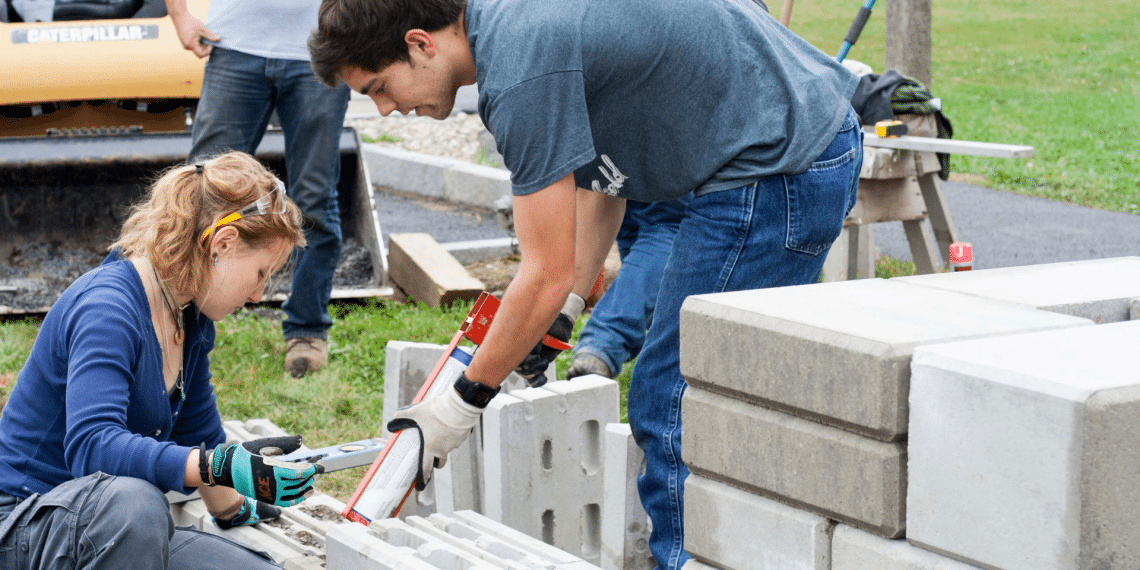
Want Hands-On Experience with Hardscaping Equipment? Tell Your Instructor About Tools for Schools

When landscape constructions students at SUNY Cobleskill stepped onto the historic grounds of the Lasell House in Schoharie, New York, they weren’t just on a class field trip. They were there to build something that would last.

Working with the Daughters of the American Revolution, the students got to lay out plans, prepare the base, and install a brand-new walkway as part of their landscape construction course.

For many of them, it was their first time using the professional-grade tools they’d seen on job sites and in trade magazines. And it was made possible by a grant from the Tools for Schools program.

Funded by the ICPI Foundation and managed by the Concrete Masonry & Hardscapes Association (CMHA), Tools for Schools is revolutionizing how hardscaping is taught in colleges and vocational programs.

For Bryan Horr, P.E., Division Engineer of Segmental Pavements at CMHA, it’s all about giving students the kind of hands-on education that sticks.

“One of the things I always stress — and one of the things I know from experience — is that I learned best through hands-on learning,” Horr said. “This program gives students a chance to get that experience with real equipment, in real settings. That kind of learning stays with you.”

Tools for Schools is a grant program. Colleges and vocational schools that have a CMHA-trained instructor and a signed licensing agreement to offer CMHA’s Concrete Paver Installer course as part of their curriculum can apply for up to $20,000 to purchase hardscaping tools — compactors, screeders, saws, and other equipment essentials that are typically outside a school’s budget.

For the grant application, schools are asked to share what kind of program they are planning to teach or what kind of project they hope to accomplish, as well as the initial list of needed tools. Grant agreements must include a promotion plan recognizing the Tools for Schools grant as well as an ongoing maintenance plan for the tools to ensure it will benefit students for years to come.

Once the grant is awarded, the schools purchase the tools, then submit receipts for reimbursement. Many CMHA members also offer discounts to schools who have been awarded this grant, which helps stretch the dollars even further.

Horr said that many of the schools use the tools not only for instruction, but also for campus projects and community collaborations. The Tools for Schools program merges the classroom with the real world.

For many students, this is the initial step in gaining the experience required to get certified as a CMHA Concrete Paver Installer, build a portfolio of real-world work, and enter the workforce with a solid foundation —literally and figuratively.

“This is one of those opportunities that really helps shape the industry’s future,” Bryan says. “We’re helping schools build better programs, and we’re helping students walk into jobs with confidence and experience.”

So, if you’re studying horticulture, landscape construction, or anything that touches the world of hardscaping, here’s a chance to get better tools and the opportunity to lay pavers instead of reading about them.

Talk to your instructor. Ask if your school has considered applying for the Tools for Schools grant. It could change the way you learn and set you up for a career that’s built on something solid.

Discover Industry Opportunity at the 2025 SkillsUSA National Leadership & Skills Conference

The hardscaping industry continues to grow, but many people exploring trade careers aren’t aware of the opportunities in this field.

This June, the Concrete Masonry & Hardscapes Association (CMHA) will help thousands of young people discover the rewarding career paths that hardscaping offers at the 2025 SkillsUSA National Leadership & Skills Conference in Atlanta.

A Gathering of Tomorrow’s Skilled Workforce

SkillsUSA is one of the nation’s leading workforce development organizations, dedicated to empowering students to become skilled professionals, career-ready leaders, and responsible community members. The annual SkillsUSA Championships bring together an estimated 15,000 students, teachers, education leaders, and representatives from 650 national corporations, trade associations, businesses, and labor unions.

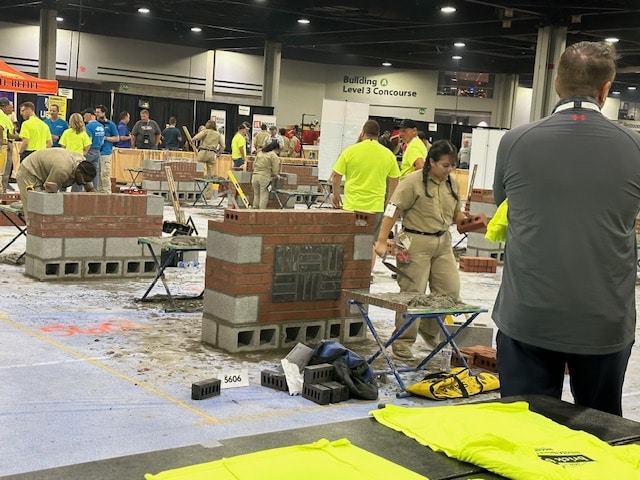
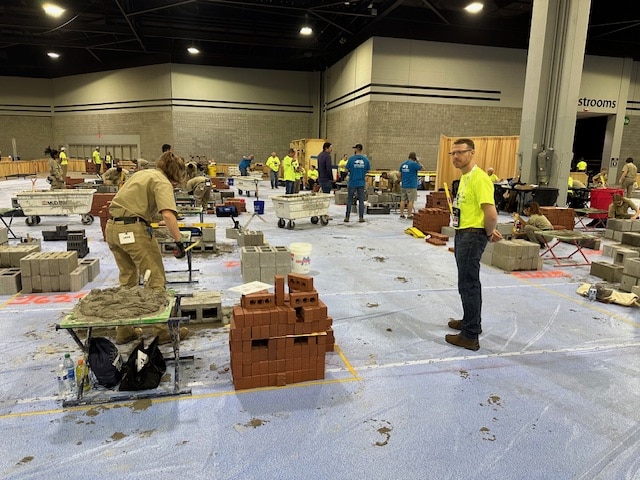
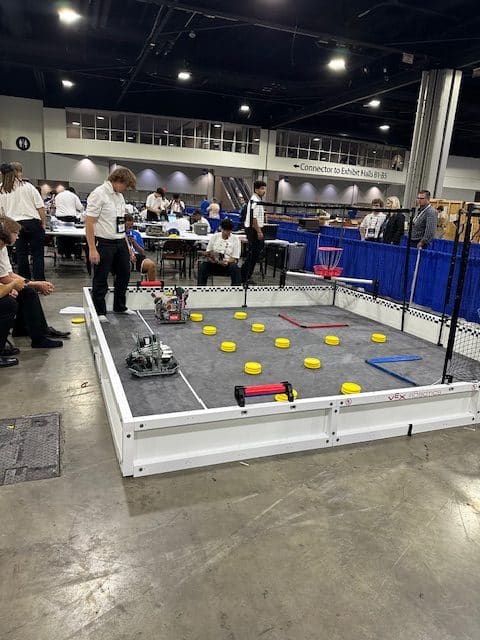
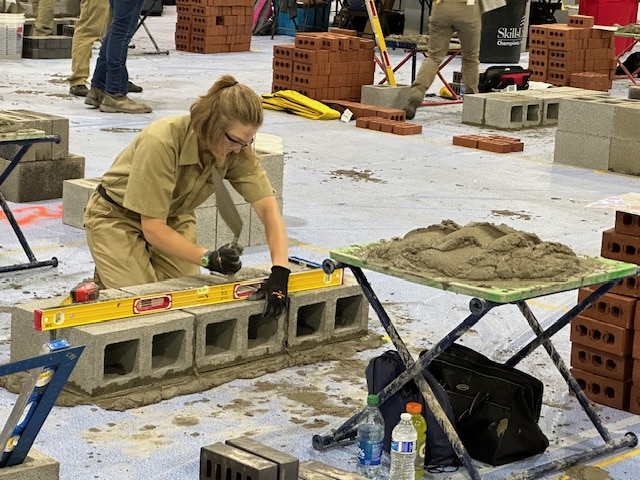
At the SkillsUSA National Leadership & Skills Conference, more than 6,500 middle school, high school, and college/postsecondary students compete in 114 hands-on skill and leadership competitions. These competitions are created and judged by industry professionals to ensure students learn real-world skills that employers demand from entry-level workers.

“SkillsUSA is crazy. It is really cool, because it’s all these—every single trade you can imagine—in the competition,” says Bryan Horr, P.E., Division Engineer of Segmental Pavements at CMHA. “There’s mechanics, airline engine mechanics, wait staff, robotics competitions, speaking competitions, medical staff, EMTs… any kind of trade, they have a competition for.”

Building Hardscaping’s Future

CMHA first attended SkillsUSA about five years ago to determine if it was the right venue for the industry and found tremendous potential due to the crossover skills represented, including carpentry, plumbing, and electrical construction wiring.

For the past four years, CMHA has been working alongside the National Association of Landscape Professionals (NALP) Foundation to establish a national landscape and hardscape competition. To qualify for a national contest, at least 15 states must host their own state competitions. Horr said they are making steady progress toward this goal.

“We’re really close,” Horr shares. “Hopefully, this year we’ll have reached the threshold of 15 and we’ll be able to start thinking about the competition.”

This initiative is more than just a contest—it’s about introducing young people to career opportunities they might never have considered. Many students visiting the CMHA booth are surprised to learn that hardscaping is an entire industry with diverse career paths.

“A lot of people didn’t know that hardscaping was an industry or was a possibility,” explains Horr. “When you think of outdoor work, you definitely think more of landscaping—the mowing of yards or doing the mulching. We talk about the other aspects, the hardscaping aspects of it, building the outdoor kitchens and the other things you can do while you’re working outside.”

Connecting Skills to Careers

One of the most rewarding aspects of participating in SkillsUSA is showing students how their existing interests and skills can translate to successful careers in hardscaping. Horr said he takes time to speak with students about their current competitions and helps them see connections to the hardscaping industry.

“We’ll talk to students in the plumbing competition about how in a hardscaping business, there’s sprinkler systems and outdoor kitchens that can be installed. Plumbing is definitely an essential part of outdoor space,” says Horr. “We talk to students competing as electricians and explain how there are aspects of the hardscaping industry that require electricians. Culinary students, we talk about outdoor kitchens. There’s always some way of tying what they’re doing to the industry.”

Beyond technical skills, the team emphasizes the lifestyle benefits of working in hardscaping.

“One of the things I really enjoy doing is working outside and I like to explain to others how much fun that can be,” Horr said. “If you really like being outside, you can definitely be paid to be outside and do what you enjoy. You don’t have to be inside all the time, working at a desk, to have a career.”

There’s also the satisfaction of creating something tangible and lasting.

“It’s always about being able to step back and see what you’ve accomplished, what you’ve built,” Horr said. “I like to explain that and hear their stories about things that they’ve built and what they’re proud of.”

Join Us at the Oasis

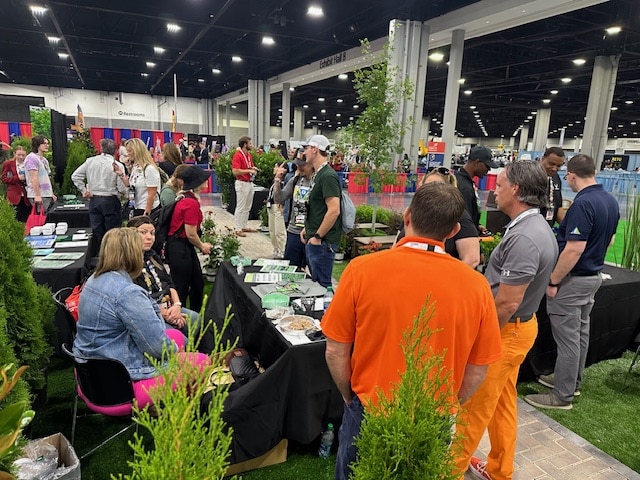
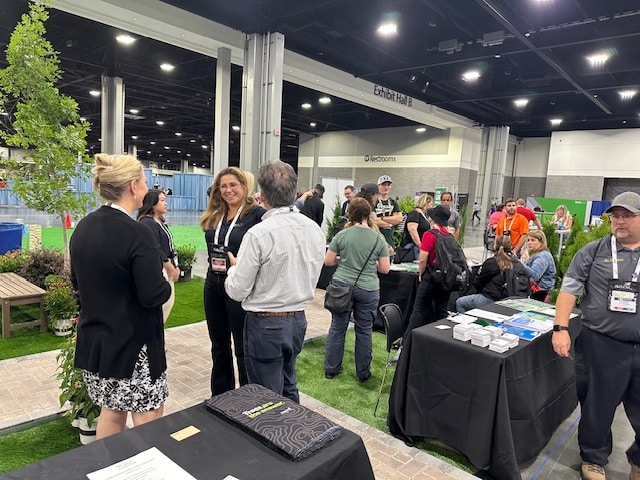
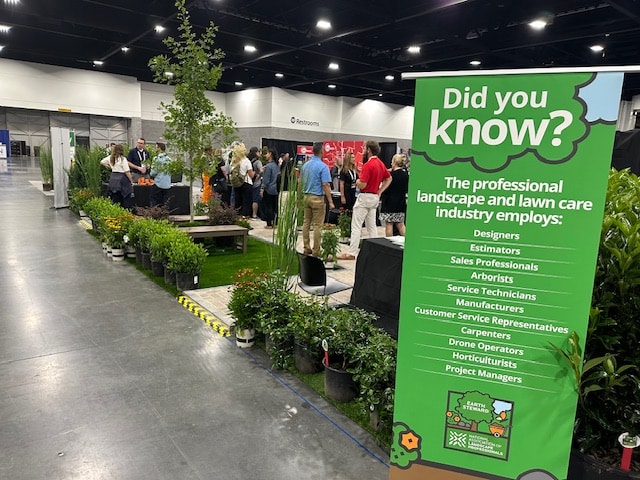
This year’s SkillsUSA will be held June 23-27, 2025, at the Georgia World Congress Center in Atlanta. If you’re attending, we invite you to visit the CMHA and NALP Foundation’s joint booth—just look for the trees!

“We’re like the oasis in the middle of the entire Georgia Convention Center,” Horr said. “It’s all mechanical things around—race cars, engines, boats, dump trucks, kitchens, all metal and plastic all over the place—and then all of a sudden, we’re the only green space.”

The booth features not only beautiful hardscaping elements like pavers arranged into a patio area, but also trees, bushes, plants, and flowers that create a refreshing contrast to the surrounding technical displays.

Visitors will also be the first to get special edition CMHA lapel pins. Pin trading is a beloved tradition at SkillsUSA, with students collecting and exchanging pins from different states and organizations.

“The kids are running around trading pins and exchanging pins and putting them on their lanyards. They’ll have like 100 pins by the end of the competition,” Horr said. “We’ve designed our own lapel pins to hand out as part of our campaign of getting our name out there.”

Whether you’re an educator interested in bringing hardscaping courses to your institution, an industry professional wanting to support the next generation of hardscapers, or a student exploring career options, we’d love to connect with you at SkillsUSA.

Lessons from a ‘Once-in-a-Lifetime’ Hardscaping Project: Downtown Ecosystem in Springfield, Illinois

When Landon Kirby, owner of Knob Hill Landscape Company, first visited the site for what would become the Downtown Ecosystem, he knew this was a “once-in-a-lifetime project.”

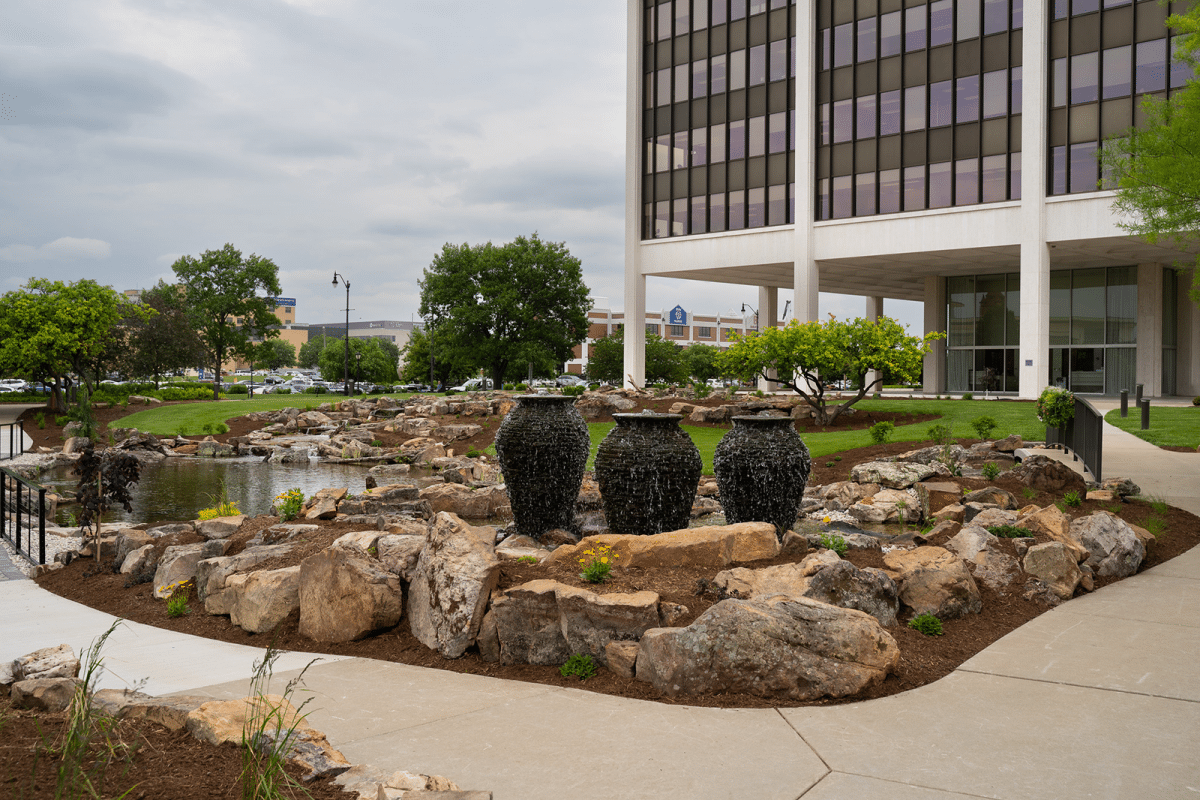
Nestled in the heart of downtown Springfield, Illinois, the Downtown Ecosystem is a living, breathing example of what’s possible with sustainable landscaping and hardscaping. What began as a client’s need to replace a 50-year-old concrete fountain evolved into a full ecosystem designed to recreate nature’s filtration processes and support aquatic life without the use of chemicals.

Kirby said they originally pitched two concepts for the project – one within the existing fountain footprint and the second that captured this larger educational opportunity and unique landscape. The client felt the same passion as Kirby and went for option two.

Mimicking Mother Nature

“My very first time I went there for a site visit I immediately got the thought of this ecosystem and the ponds and the waterfalls because the terrain was kind of rolling. I just got to thinking that this is a great opportunity because ecosystems are very neat, how they work, being all naturally filtered and very unique if you know how the whole system works,” Kirby said.

“You’re mimicking Mother Nature and the natural ecosystem. You’re showing how the water can be cleared without chemicals, how the fish play a part. The aquatic plants play a part, the waterfalls with the oxygenation of the water for the fish, and it just kept hitting me – this is a great opportunity to teach people about this.”

The educational opportunities also fell in line with the client’s mission, as their company works with educators and teachers.

“This is the perfect opportunity and they really thought the same thing. They trusted our vision,” Kirby said.

Sustainable Transformation

Transforming this space into a fully functional ecosystem was no small task.

At the north end of the ecosystem, a wetland filter was carefully constructed to naturally cleanse the water as it flows through multiple layers of river rock. This method mimics marshy areas near rivers and lakes, ensuring water clarity and a thriving habitat. On the opposite end, an intake bay with pumps pre-filters the water before recirculating it through the system.

The design also features three waterfalls, not just for aesthetics but to enhance oxygenation and improve the environment for fish. Additional features like strategically placed woody materials support beneficial microorganisms, and fish play a crucial role in the ecosystem by feeding on algae and producing nutrients for plant life.

The project included 2,000 square feet of permeable pavers. The permeable paver patio joints between the pavers were filled with granite chips, allowing the rainwater to penetrate the pavers. This prevents any storm water runoff from entering the ecosystem and possibly contaminating the water source.

And to top it off, Kirby’s team of eight built this space over 101 days in the heart of an Illinois winter.

“In Illinois, the winters are pretty sketchy. We do get snow. We do freeze. We actually started that project the first week of November and we finished the last week of April. We were really worried at first, but it was the only project we were working on in the winter, so it allowed every employee to be focused on it,” Kirby said.

“…It was a once-in-a-lifetime project and I recognized it. All our employees recognized it. We all treated it like that. We didn’t cut any corners. We just tried to make it the best we absolutely could.”

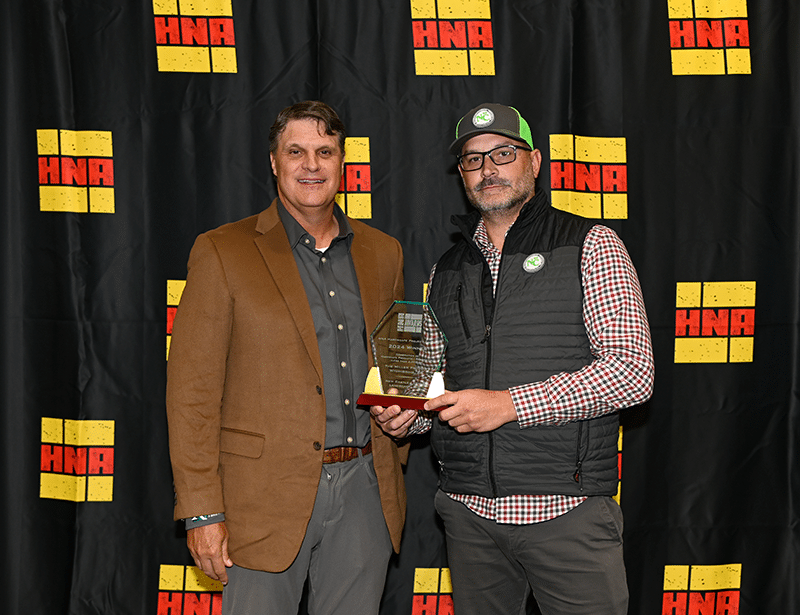
The effort paid off. The project won a National Association of Landscape Professions “Gold” Award of Excellence in 2023 and at the 2024 Hardscape North America awards, it won the Combination of Hardscape Products – Commercial category.

“We’re from a relatively small market and we are still a relatively small company. To be recognized on that level is very special. It puts things in perspective and takes away a lot of all those stresses and things that you worry about so much,” Kirby said. “Our employees love it. It means the world to me for them to be recognized for their skills.”

Always Evolving

For aspiring hardscapers who want to one day be part of their own award-winning projects, Kirby advises that every project should be a learning opportunity.

“Always know that you can be better than you were yesterday,” Kirby said. “We won a national award, but we also still understand that we could have done something better. There’s a long list of things that we would improve from this project after having done it. Learn from every project and just have that mindset of continuously wanting to get better.”

Kirby’s favorite part of the Downtown Ecosystem project is the way it changes over time. He has been working with the client to lead tours and field trips for students to share and educate about the ecosystem and he said that he discovers something new on every visit.

“That’s one of the things with ecosystems, they’re always evolving because they are living and growing and changing,” Kirby said.

“Every time I go there, I notice something different that’s changed or a new plant that’s popped up and growing out of the boulders all of a sudden. Some of those seeds could have been on those boulders for hundreds of years, and now, all of a sudden, it’s the right conditions and now they’re sprouting grass out of the boulders. It’s amazing.”

The original request was for a fountain repair, but Knob Hill Landscaping saw an opportunity to create something much bigger. The Downtown Ecosystem isn’t just an award-winning project—it’s a new benchmark for what’s possible in urban landscapes.

Lessons for Aspiring Hardscapers from an Award-Winning Backyard

With a remarkable 215 project submissions across 19 categories in 2024, the recent Hardscape North America (HNA) Awards offered a reminder that an award-winning project isn’t just about technical perfection. It’s about creating spaces that transform how people live, entertain, and connect with their outdoor environments.

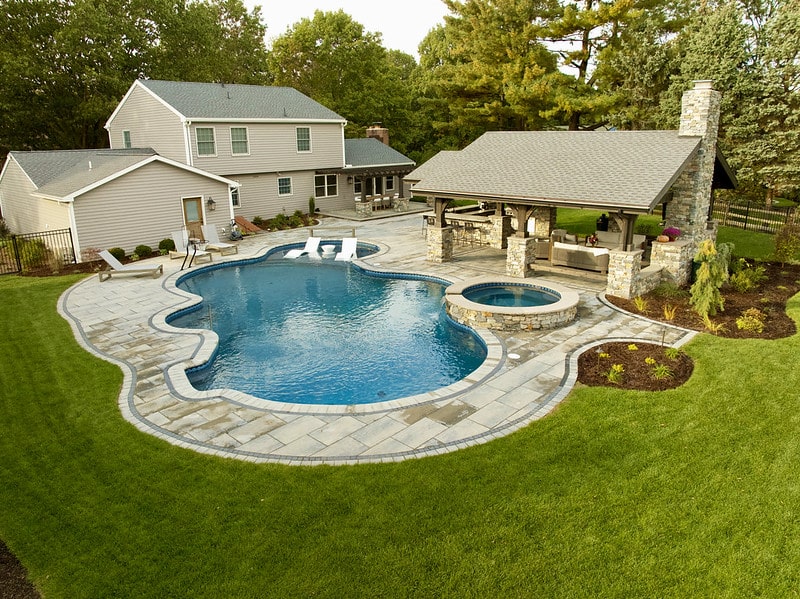
Among the standout projects was New Castle Lawn & Landscape’s Miller Project, which won the Combination of Hardscape Products – Residential (less than 3,000 sq ft) category.

This stunning backyard transformation, led by New Castle designer Phil Neri, offers inspiration for aspiring hardscape professionals looking to create their own industry-defining projects.

Mission Accomplished

The Miller family approached New Castle Lawn & Landscape with a clear request: they needed a large, functional outdoor space to entertain their big family.

 “We were lucky to have a client who knew exactly what they wanted and had the budget to make it happen,” Neri said. “It was really exciting to bring the design to life and include all the details—it turned out great.”

In addition to a pool, the transformed backyard would include an expansive covered entertainment area and an outdoor kitchen with a grill, bar, fireplace, and lots of seating.

Using the design of the pool as their starting point, Neri and his team were able to establish a layout that would guide the rest of the project. The roof structure became the defining element, setting the stage for the dual living spaces that anchor the backyard. From there, the team incorporated a raised patio with a pergola, a rustic-modern mix of materials, and a show-stopping lighting feature that creates a “starry night” effect.

“We like to keep a few surprises up our sleeves when it comes to our designs. During the final presentation, I paused and said, ‘There’s one more thing I’d like to show you.’ With a click of a button, the small recessed lights within the patio flickered on. Instantly, without hesitation, they said, ‘Yes, we want that,’” Neri recalled.

“Having software that allows people to be able to see what things are going to look like is a tremendous help. It gets them excited about that product even before you put a shovel in the ground.”

The Art of Blending Materials

Another standout aspect of the Miller Project is its seamless integration of various materials.

Every element was carefully considered, from the rustic-modern aesthetic to the strategic material selection. Neri and his team used a mix of Techno-Bloc pavers, natural stone, and hemlock wood to create a cohesive and visually striking environment. This mix not only enhanced the project’s visual appeal but also demonstrated how diverse materials can complement each other when thoughtfully arranged.

Neri said he tries to recommend a blend of products in his designs so things don’t get stale. As a designer, it’s his job to guide the client so they don’t get overwhelmed by all of the choices.

“Right from the start, we guide our clients by saying, ‘Based on what you’ve told us and your style, here’s our recommendation—this is how it will look,’” Neri said. “And we do a great job. Nine times out of ten, only minor tweaks are needed to material choices because we’ve listened carefully and nailed their vision.”

Lessons for Aspiring Hardscapers

For those looking to one day create award-winning projects of their own, Neri encourages aspiring hardscapers to learn every aspect of the business.

“Take it all in while you can—learn as much as you can, from fieldwork to the selling process to designing within budgets,” Neri said.

He also encourages people new to the field to seek mentorship and to consider collaboration.

“Establish good relationships with other companies. Learning from those outside your immediate area can be incredibly valuable,” Neri said.

A Community of Inspiration

Winning a Hardscape North America Project Award is no small feat, especially considering the incredible talent across the industry. For Neri, the recognition is both an honor and a reminder of the community in hardscaping.

“I was pretty excited,” he said. “Winning a national award has been something on my to do list. There’s a lot of competition out there. I look at some of the work these other guys do and think, ‘Wow! How did we get chosen for this?’ There are a lot of guys out there killing it and doing phenomenal work. I think we all inspire each other.”

For those aspiring to make their mark in hardscaping, the Miller Project offers a blueprint: Listen to your clients, be creative, and never stop learning.

Crafting Sacred Spaces: How the Award-Winning ‘Garden of the Empty Tomb’ Showcases Creative Options in Hardscaping

Blending creativity and craftsmanship, the award-winning “Garden of the Empty Tomb” at Alto-Reste Park in Altoona, Pennsylvania reveals new options for building meaningful and lasting legacies through hardscaping.

A Vision Brought to Life

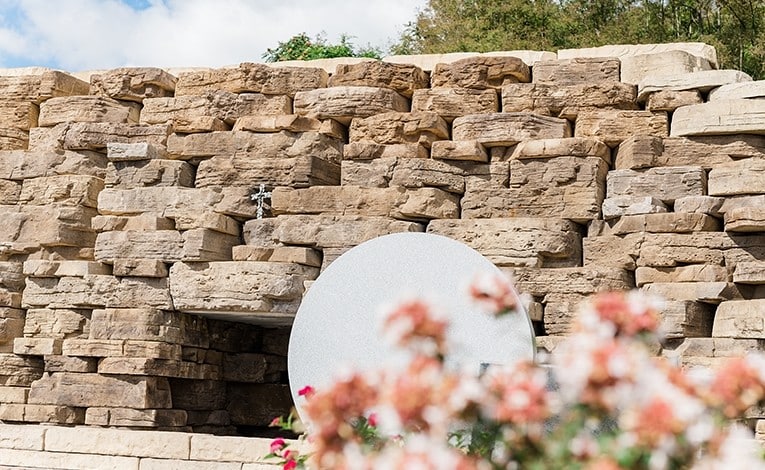
The “Garden of the Empty Tomb” was conceptualized by Geoff Behrens, Alto Reste’s general manager, who envisioned a memorial garden replicating the Jesus’ Empty Tomb, a significant element in Christian tradition.

Behrens wanted the wall to look like ancient Israel with 12 monoliths to symbolize the 12 tribes of Israel and columbariums in the 325-foot-long wall where people can be laid to rest. With the rise in cremations, this garden was designed to provide a sacred space for people’s loved ones.

Richard Kerr Jr., President of Kerr Landscaping and Maintenance Inc., was challenged to bring this special vision to life.

“Whenever you’re doing a project, you’re trying to build a selling point that people will come and buy into. So, whenever you’re creating something like this, it has to be something that whenever somebody walks in and they see it, it’s like, ‘I’m sold on this. This is awesome. This is where I want to be,’” Kerr said.

“A project like this, I mean, you’re dealing with thousands of people that this will be their last resting place.”

Kerr said the original plan called for temporary walls that would be removed and reinstalled in different phases. Then he remembered the Outcropping wall system product line from Rosetta Hardscapes and producer R.I. Lampus. It replicates the look and beauty of natural stone while still having the installation efficiencies of precast concrete products. Kerr thought it would get the right look while also being more cost-effective in the long run. 

“The success of this project was really based on the contractor, Richard, really identifying the problem and the need of the customer and positioning a product that he thought was the right fit,” said Gerry Garcia, business consultant for project and construction strategy for Rosetta Hardscapes. “It really tells the story of what our product can achieve well beyond its aesthetic value. We’re very unique. It has an opportunity to fit certain needs that other products can’t.”

Redefining What is Possible

Projects like this require more than technical skill; they demand a vision and the ability to consider creative options to bring that vision to life. Kerr advises hardscaping newcomers to immerse themselves in the industry, learn from seasoned professionals, and embrace different opportunities.

“Be working with somebody that does do it and get some experience on working on a project of that size. You gotta be around it to do it,” he said.

For those considering a career in hardscaping, “Garden of the Empty Tomb” is a compelling reminder of the industry’s potential to craft spaces that are not only visually stunning but also deeply meaningful.

“The sky’s the limit with where hardscaping can go and the projects that can be entertained to be built,” Kerr said. “We are always striving to do something bigger and better and cooler. I use the word ‘cool’ because the project was so cool for us to be involved in. There’s nothing else like it that I’m aware of.”

A Prestigious Recognition

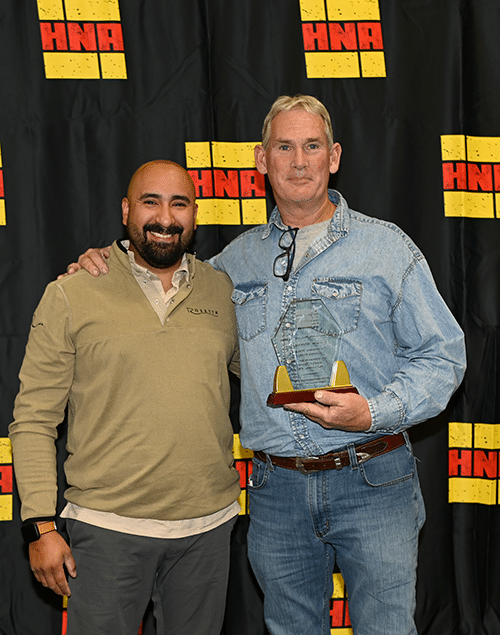
“The Garden of the Empty Tomb” was recognized at the 2024 Hardscape North America (HNA) for Best Commercial Retaining Wall.

“It was getting recognition locally. But to be able to put it at HNA, to win – that was phenomenal,” Garcia said. “…It’s really recognizing and really putting the spotlight on the guys that make our product what it is and make it look as good as it does.”

Garcia said it was emotionally touching to see Kerr and his team win the award. For his part, Kerr said it was an “once in a lifetime” dream.

“I was quite honored to be there. To have a town as little as our own in that running, I was quite honored to be involved even in the conversation. And then we got lucky enough to win,” Kerr said.

“I don’t think you can get much higher of an award in the hardscaping business than that award. If there is something out there bigger than that HNA award, I don’t know about it. It’s a pretty big deal for us. I accomplished something in my lifetime that not many people will.”

GET STARTED WITH A CAREER IN HARDSCAPING TODAY!