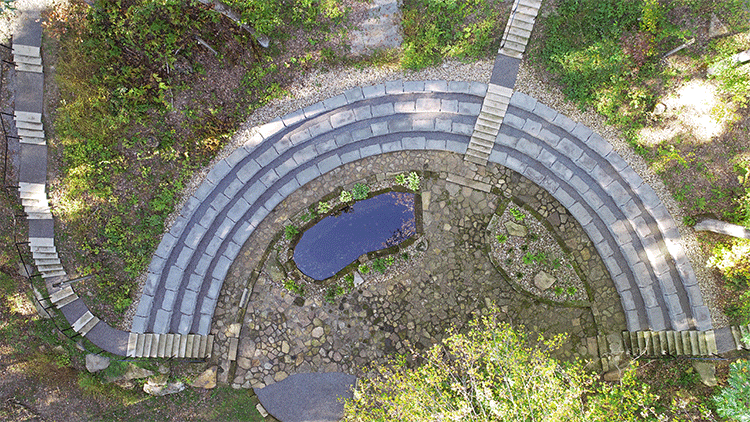
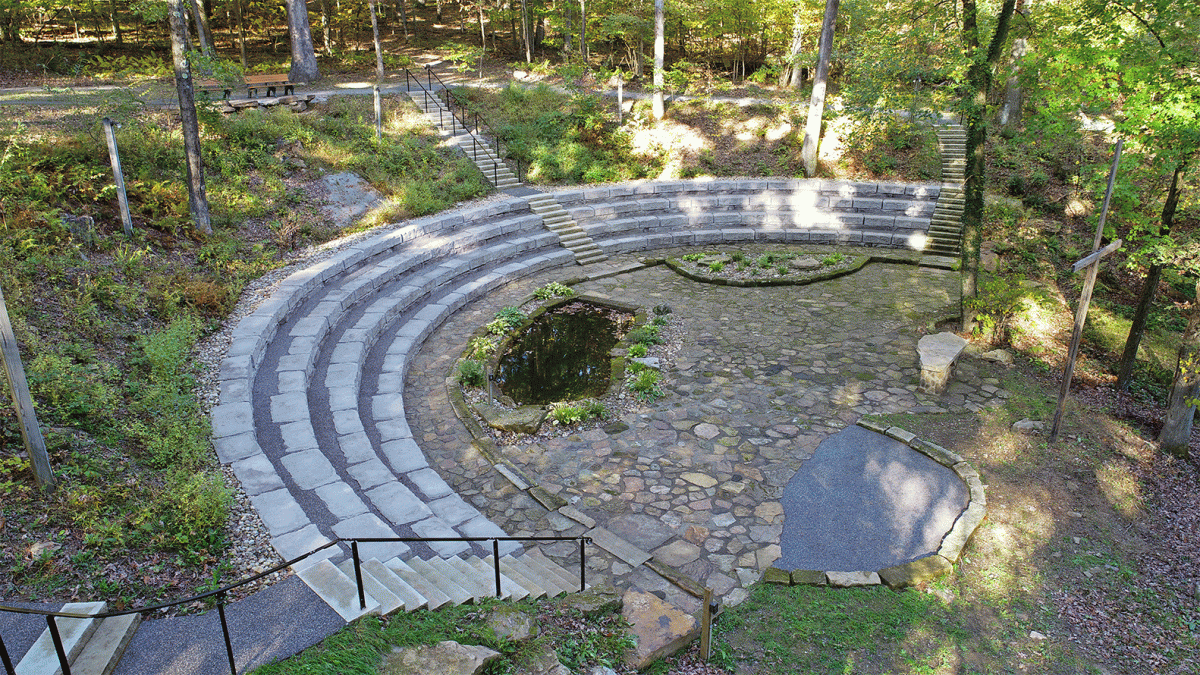
Nestled in the woods along a creek at Camp Lutherlyn in Butler, Pennsylvania, an amphitheater that has hosted generations of campers since 1980 recently underwent a remarkable hardscaping transformation.
The project, completed by Gargiulo Landscape, won the Combination of Hardscape Products– Commercial category at the 2025 Hardscape North America Awards. It was honored not just for the beauty of the final result, but for the thoughtful craftsmanship and problem-solving that brought it to life.
Honoring the Past While Building for the Future
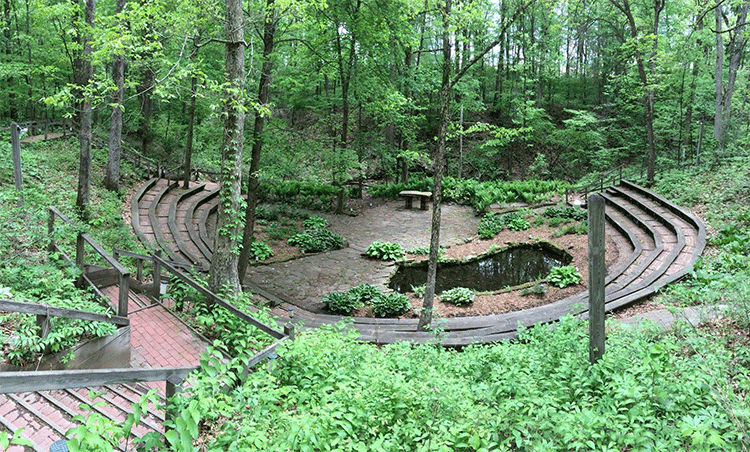
From classes to worship services to weddings, Camp Lutherlyn’s amphitheater holds decades of memories. The donors funding the renovation had one clear directive: preserve the feeling of the place they loved.
“They wanted to keep that same feel that they had when they were there,” said Joe Gargiulo, owner of Gargiulo Landscape. “They didn’t want to make it all new and revised. They actually wanted to keep that vibe from the camp.”
This meant working with the site’s character. The team carefully removed, cleaned, and re-laid original barnstone from the patio, preserving the rustic character while improving functionality. Even boulders were stored and reinstalled.
“This is at a summer camp and they use this area as an outdoor classroom. If it’s an outdoor classroom, it’s intended to teach kids about nature. What better way to do that to say we’re using the natural stone that was already here,” Garcia said.
But when it came to creating the tiered amphitheater seating, Gargiulo sought out innovative hardscaping options.
“We couldn’t use wood, it would go bad,” Gargiulo said. “And they didn’t want to do metal because it gets hot, it gets cold, it gets slippery.”
Instead, they needed to thoughtfully combine different materials that could help achieve both aesthetic and functional goals.
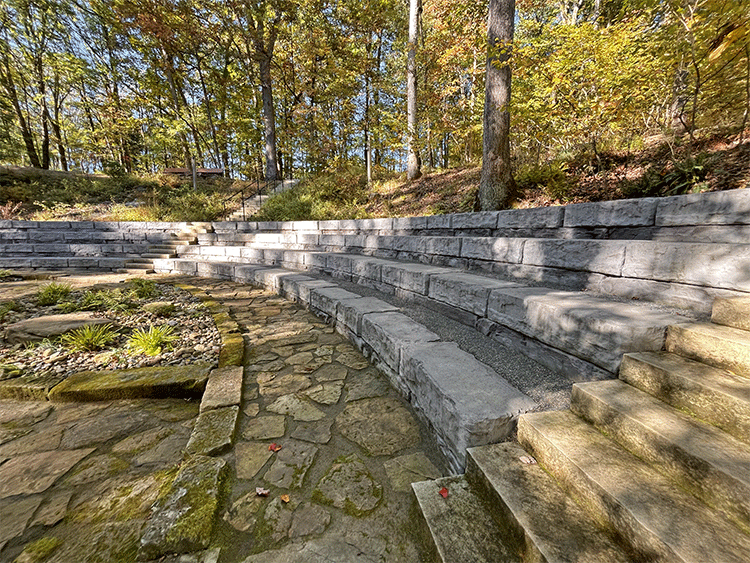
The team used R.I. Lampus Grand Ledge wetcast seating units for the tiered amphitheater seating in order to meet the site’s competing needs.
“Grand Ledge really fit that rustic feel of the campground. It’s just much easier to use in this setting because you’re married to that very consistent height and grid placement,” said Andrew Kufen, Contractor Development at R.I. Lampus.
The wetcast material also resists moss growth which was necessary for the shady, wet area.
Between the seating tiers, the team installed perkEpave, a permeable surface made from recycled rubber and gravel with adhesive binders. This allowed water to drain through rather than pooling, addressing the site’s chronic drainage issues while maintaining a natural appearance.
For the patio itself, they used resin-based jointing sand to stabilize the historic barnstone, and applied a porous binder behind each tier to create permeable surfaces throughout.
This project succeeded in part because multiple parties brought their expertise to the table. The partnership between Gargiulo, Lampus, Rosetta, and dealer Harmony Hardscape meant the contractor could try out new products, brainstorm creative ideas, and have technical support throughout the process.
“This is a very attractive project because of the setting and what you’ve built,” Kufen said. “You know that what you’ve built is going to get used and be there for a very, very long time.”
When Nature Throws a Curveball
While the project overall went pretty smoothly, the excavation process was a bit of a challenge. But Gargiulo’s team saw this as an opportunity to demonstrate their problem-solving skills.
“Before we tore it all down, we had to keep the original material, so we had to store everything. All the flagstone was picked up by hand. Every boulder, nook, and cranny—we had to store that, clean it,” Gargiulo said.
“When we opened up that hillside a little bit, we just opened up a ton of water, so we had to focus on getting the water out and building up our foundation with a bunch of drains. It’s definitely labor intensive when you’re pulling up flagstones—they’re pretty big, you got to put them on pallets, move them, dig out the area, and then go back and relay everything. We had to redo all the bedding. We were saving as much plant material as we could. One of the biggest things was the pond. There were frogs, so we had to save all the frogs and get them out. And then of course they always came back, so we had to keep saving more frogs.”
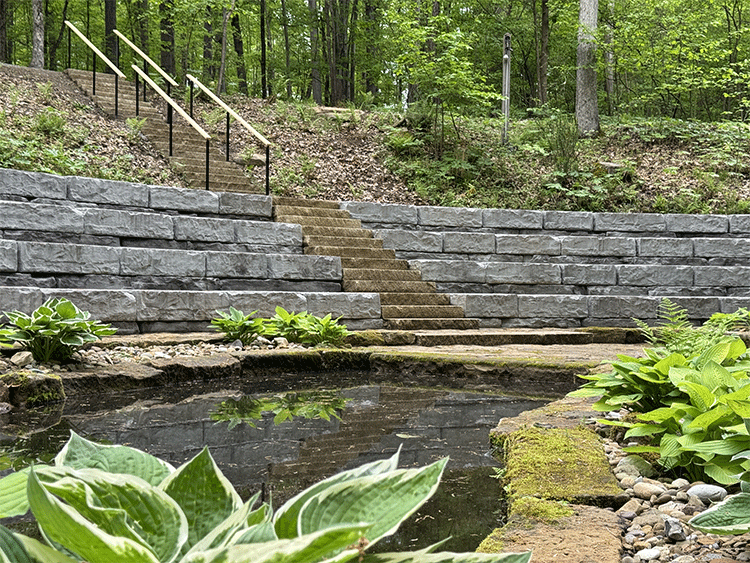
The spring in the hillside wasn’t originally anticipated. The solution required extensive drainage work—two feet of drainstone beneath the patio, strategic piping, and a comprehensive water management system that worked with the site’s natural hydrology rather than against it.
It became a defining feature of the project. The team created a pond that naturally manages spring overflow, feeding the creek while serving as habitat for frogs and red-spotted newts. They even built steps down to the creek for campers to access the continuously running spring water.
“Being able to take and listen to what the client is seeking and being able to deliver that really goes a long way,” said Gerry Garcia, Business Consultant at Rosetta Hardscapes. “They really wanted something natural, and the Gargiulo team was able to take that request and really keep that natural feel of the environment, even though they were scared that this was a big renovation.”
Lessons for Aspiring Hardscapers
There are many lessons to be learned from an award-winning project like the Amphitheater at Camp Lutherlyn, especially for aspiring hardscapers.
Listen deeply to what your clients value. Sometimes the most important work is about understanding the emotional connection people have to a space and honoring it.
Expect the unexpected. The best hardscapers turn challenges into features that enhance the overall project. Your ability to adapt and innovate on-site can be just as valuable as your technical skills.
Material selection is about more than aesthetics. Consider durability, maintenance, functionality, and how materials work together as a system. Don’t be afraid to mix modern engineered products with natural materials when it serves the project’s goals.
Build relationships with manufacturers, suppliers, and other industry professionals. These partnerships give you access to expertise, support, and solutions you might not have on your own. Don’t try to figure everything out alone.
But Gargiulo’s most important message for aspiring hardscapers is to recognize the artistry in what you do.
” Every job is a little different, and you get new challenges, and there’s new products. You have to look at it like you’re an artist,” he says. “We go out and we rip out a whole property and we redevelop it. It’s like a blank canvas and we make a beautiful picture. We’re artists because you have to have the right eye. You’re dealing with different types of soils, and you’re dealing with water, and you’re dealing with what you’re working around. There’s a lot of components, a lot of moving things. You have to look at least five years down the road because that is what you are working for. You’re working for that longevity.”
Hardscaping requires understanding drainage, soils, elevations, utilities, materials, and how they all interact. It demands both technical knowledge and creative vision. And when done well, like at the award-winning Camp Lutherlyn, it creates spaces that will serve communities for decades.