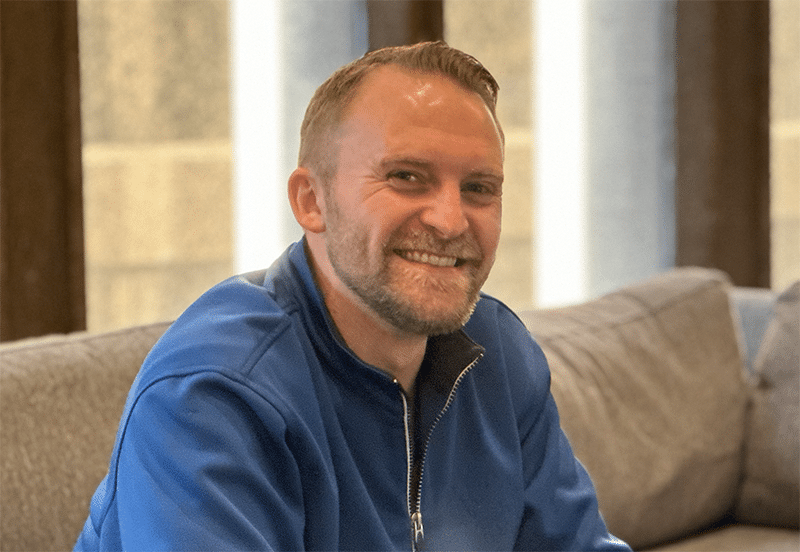
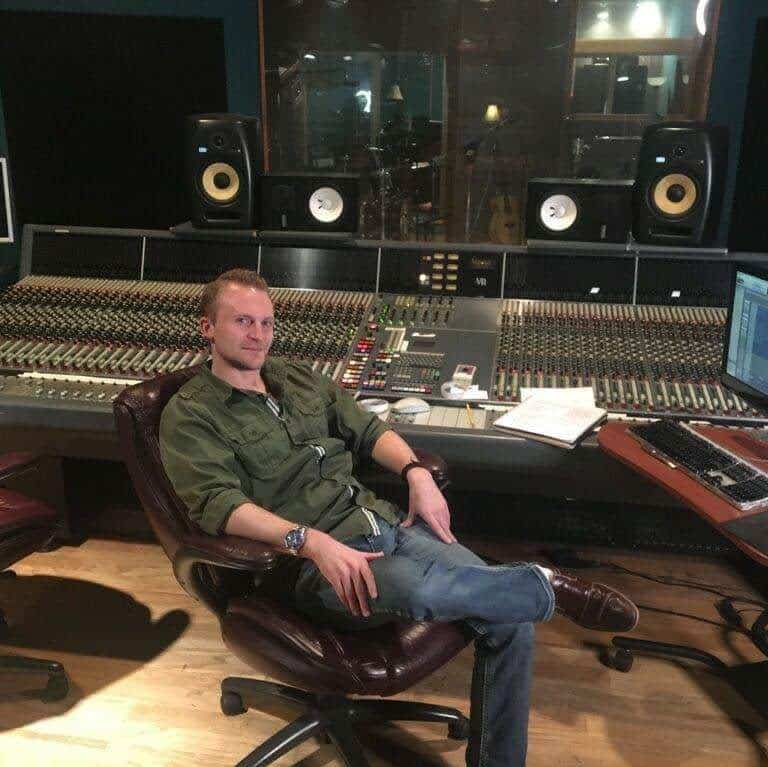
When Eric Hammer tells people he’s a partner at WestBlock Systems, an innovative concrete product development and licensing company, they might not guess that he once spent his days in a Nashville recording studio, producing music for singer-songwriters.
His journey from audio engineering to hardscaping is a testament to how diverse skills and experiences can find surprising applications in the industry.
A Family Foundation
“I actually grew up in the industry,” Hammer said.
Hammer is the third generation to run WestBlock. In fact, one of his early memories is “breaking ground” at his father’s manufacturing facility in DuPont, Washington with his toy shovel.
As a teenager, he spent summers working at a block plant in Sugar Land, Texas, starting with landscape maintenance and eventually learning to operate the production machinery.
But despite the family foundation, Hammer’s passions and interests initially led him elsewhere.
“While I was in high school, I started DJing, and that got me interested in music production,” he said.
He attended Middle Tennessee State University and earned degrees in both audio and business. After graduation, he launched his own freelance company, focusing on singer-songwriter development and music production.
An Unexpected Return
In March 2019, Hammer’s father called with devastating news. His right-hand man at West Block Systems had terminal brain cancer.
“He said, ‘I need you to go down to Birmingham and learn as much as you can from him,’” Hammer said.
In a twist of timing, COVID-19 arrived soon after, effectively shutting down Hammer’s audio engineering business.
“Musicians weren’t touring, they weren’t playing gigs, and that effectively killed my own revenue stream,” he said.
The pandemic forced his hand into joining WestBlock full-time, but it also created an unexpected opportunity.
“That really allowed me to do a full dive into the company, and learn the materials, and just really understand all the ins and outs of the industry,” Hammer said.
Creative Problem-Solving in Concrete
During the pandemic shutdown, Hammer taught himself programs like SketchUp and Adobe suite while updating the company’s website and other materials. He also admits that he doesn’t sleep much.
“What do you do when you only sleep about four hours a night? Well, you create things,” he said.
One sleepless night, he started playing around with block ideas in SketchUp. He noticed that the company had two different molds for similar products and wondered if they could be combined.
He sent the design to his father, who supported the idea. They applied for a patent, it was approved, and the product quickly went into production with a Tennessee licensee.
Since then, Hammer has designed multiple patented products for WestBlock Systems. Each design responds to specific challenges: machine capabilities, target weights, market needs, or particular installation requirements.
“It’s been one of those things where I’ve accumulated these skills just naturally from updating our materials, and then it just has worked out to where producers have started coming to us with specific requests,” he said.
The creative process, Hammer discovered, mirrors his music production days.
“When I was producing music, I would just be like, I really like the influence of this artist that where they did this one thing with the guitars, and then I really liked how the synth sounded in another song, and so let’s combine them together to come up with something completely unique,” he said.
“And in a lot of ways, that is what I am doing now, just with concrete instead of audio. There are still restrictions that you have to work within, so then you have to start problem solving. It’s the same thing when you’re mixing a song, trying to get the right balance of all the components together.”
A Diverse Workload
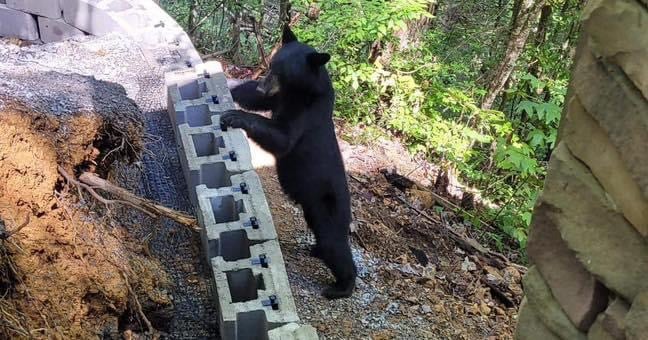
Today, Hammer’s role at WestBlock encompasses everything from product design and digital marketing to preliminary designs, installer training and construction work. He’s coding a new tool for the website and occasionally stepping in to build retaining walls. And he still creates music, producing soundtracks for the company’s product animations and promotional videos.
“It’s different every single day,” he said. “You’re always trying to figure out how to solve a different problem, or if you’re just bored with whatever you were working on the day before, you can switch over to something else immediately.”
Hammer is dyslexic and ADHD. School was often tough for him growing up. At times he felt like many people wanted to give up on him. Taking on this role at WestBlock has given him an opportunity to show what he can really do.
“Part of it is, I’m going to prove them wrong,” he said. “But a lot of it is just proving to myself that I can do it as well.”
When Hammer experiences breakthroughs in his work, the joy is palpable.
“Just last week, I got this massive breakthrough, and I just shouted at the top of my lungs, ‘Yeah!’ And I scared the crap out of my fiancée. Sometimes it’ll happen at, like, 3 in the morning, and I get up, and I’m just like, ‘I’ve got to go work on this right now,’” he said.
“In some ways, if you find your niche in this industry, it becomes addicting.”
Advice for Aspiring Hardscapers
For those considering a career in hardscaping, Hammer encourages them to find how their specific skillset might be used. He emphasizes the industry’s creative demands.
“This industry thrives off of creativity,” he said. From communicating products effectively to creating hardscape installations that are “pieces of art.”
“It’s a much more involved industry than you might think,” Hammer said.
He also stresses the importance of technical knowledge and a willingness to keep learning.
“You are creating an engineered structure,” he said. “The knowledge of how to do things right is really important, but also the ability to do them and make them look good.”
Expanding His Family Legacy
Hammer has found unexpected fulfillment in carrying on his family’s legacy while bringing his own creative vision to the company.
“Coming on, I was unsure about if this was going to be something that I just stepped in until my dad found somebody, and then I would go back and do my own thing,” he said. “But instead, it’s turned into something that I actually do feel a lot of pride and passion for.”
Hammer has been able to use his unique and varied skill set to evolve the company and carve out his own place in the industry.
“The path to success is never a straight line,” Hammer said. “I don’t think that I would have ended up where I am today had I not had all the experiences that led up to this point.”